Title: The Progression of Dash Cameras Alongside In-Car Audio and Infotainment Solutions
Introduction
The automotive sector has experienced remarkable technological progress in recent decades, with dash cameras and in-car audio and infotainment solutions leading this transformation. Initially, these technologies had separate functions, but gradually, they have merged to enrich the driving experience, enhance safety measures, and offer entertainment.
The Initial Phase of Dash Cameras
Dash cameras, commonly referred to as dash cams, made their debut in the late 1980s and early 1990s, primarily utilized by law enforcement for evidence gathering. The first iterations were large, featured limited recording options, and often necessitated manual operation. With advancements in technology, dash cams became smaller, more affordable, and accessible to everyday users. By the early 2000s, consumer-level dash cams gained traction, introducing features such as continuous loop recording and motion sensing.
Progress in In-Car Audio Systems
In tandem with dash cam advancements, in-car audio systems were progressing as well. From simple AM/FM radios in the mid-20th century, automotive audio systems evolved into elaborate arrangements with cassette players, CD players, and later, digital audio solutions. The advent of satellite radio and Bluetooth support in the early 2000s represented a major breakthrough, enabling drivers to stream music and engage in hands-free communication.
Merging of Infotainment Systems
The 2010s marked the emergence of infotainment systems that integrated audio, navigation, and communication functionalities into a unified interface. These systems boasted touchscreens, voice recognition, and smartphone compatibility through platforms like Apple CarPlay and Android Auto. Infotainment systems became the primary interface for managing various in-car features, offering a smooth combination of entertainment and practical use.
Integration of Dash Cameras and Infotainment Systems
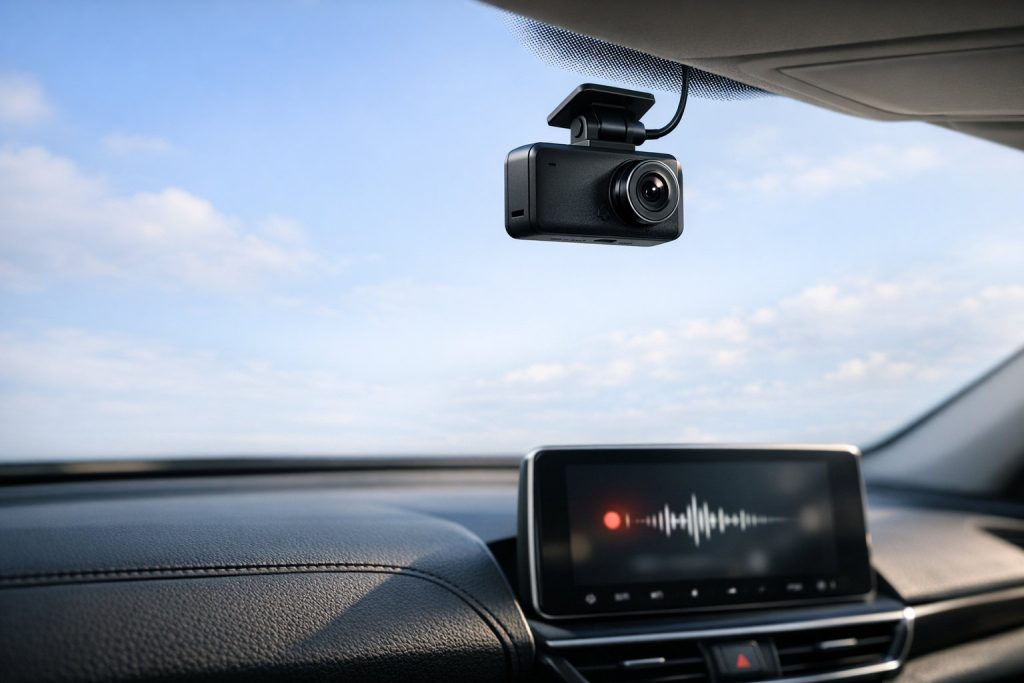
As dash cameras and infotainment systems evolved, their integration became unavoidable. Contemporary vehicles frequently come equipped with integrated dash cams that work in tandem with the infotainment system. This setup facilitates real-time video presentation, straightforward access to recorded clips, and even options for cloud storage. Several systems include advanced capabilities such as collision detection alerts, lane departure warnings, and monitoring for driver fatigue, thereby enhancing overall safety.
The Influence of Artificial Intelligence and Connectivity
The incorporation of artificial intelligence (AI) and connectivity has further fueled the advancement of these technologies. AI-enhanced dash cams can assess driving behaviors, detect road signs, and issue predictive maintenance notifications. At the same time, connected infotainment systems provide real-time traffic information, weather updates, and over-the-air software enhancements, ensuring drivers have timely features and data readily available.
The Outlook for Dash Cameras and Infotainment Systems
As we look to the future, the landscape for dash cameras and infotainment systems is set for even more groundbreaking developments. The emergence of autonomous vehicles is expected to underscore the essential role of these systems in vehicle-to-everything (V2X) communication, boosting safety and efficiency on roadways. Furthermore, advancements in augmented reality (AR) and virtual reality (VR) may transform the in-car experience, offering immersive navigation and entertainment choices.
Conclusion
The advancement of dash cameras and in-car audio and infotainment systems illustrates broader trends in automotive technology, where safety, connectivity, and user experience take center stage. As these technologies continue to merge and progress, they promise to provide a driving experience that is safer, more enjoyable, and increasingly interconnected for all users.