# An In-Depth Manual for Aspiring ECU Tuners: A Step-by-Step Process
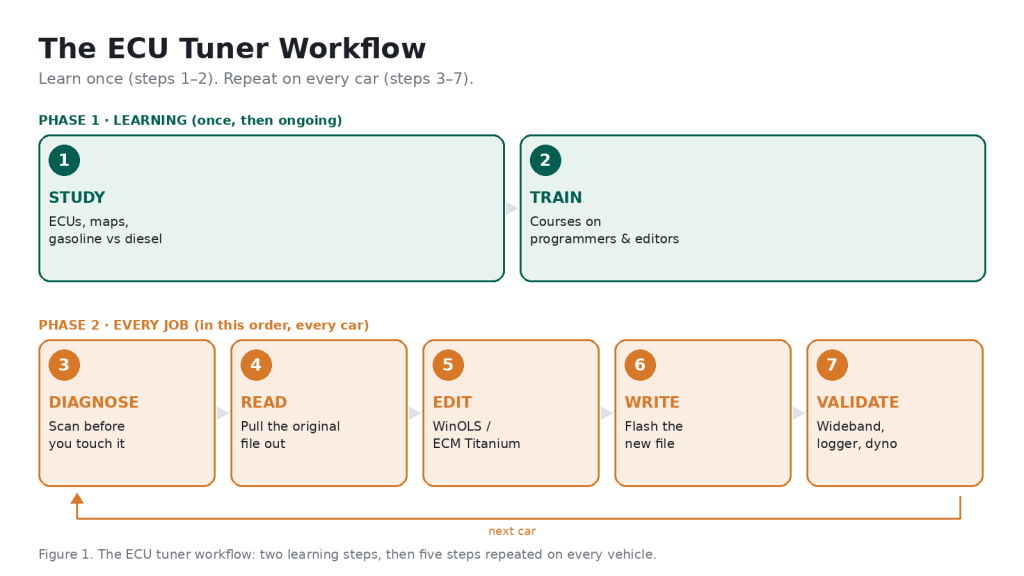
The realm of automotive tuning is extensive and thrilling, providing enthusiasts the chance to boost vehicle performance via various modifications. One of the most significant facets of tuning is the Engine Control Unit (ECU), responsible for overseeing engine operations. Achieving proficiency as an ECU tuner requires a blend of technical expertise, hands-on skills, and a love for automotive performance. This manual outlines a step-by-step process to guide you on your path to becoming a skilled ECU tuner.
## Step 1: Grasp the Fundamentals of ECU Tuning
Before immersing yourself in the technical details, it is crucial to comprehend the basics of ECU tuning. The ECU is a computer that regulates engine functions such as fuel injection, ignition timing, and air-fuel ratio. Tuning entails adjusting these parameters to enhance performance, fuel economy, or emissions.
### Key Principles:
– **Air-Fuel Ratio (AFR):** The proportion of air to fuel within the combustion chamber.
– **Ignition Timing:** The synchronization of the spark plug ignition concerning the piston’s location.
– **Boost Control:** Regulating the pressure in turbocharged or supercharged systems.
## Step 2: Gather Essential Tools and Software
To become an ECU tuner, you’ll require specific tools and software for reading, adjusting, and writing ECU data.
### Crucial Tools:
– **OBD-II Scanner:** For accessing diagnostic trouble codes and real-time data.
– **ECU Flash Tool:** For reading and writing ECU maps.
– **Wideband O2 Sensor:** For precise air-fuel ratio readings.
### Software:
– **Tuning Software:** Applications like HP Tuners, ECUtek, or Cobb Accessport enable ECU parameter modifications.
– **Data Logging Software:** To observe engine performance and make informed tuning choices.
## Step 3: Acquire Technical Expertise
Grasping the mechanical and electronic systems of vehicles is essential. Think about enrolling in automotive courses or workshops that encompass engine dynamics, electronics, and tuning concepts.
### Topics to Explore:
– **Engine Mechanics:** Understand engine components and their roles.
– **Electronic Systems:** Learn how sensors and actuators interact with the ECU.
– **Fuel Systems:** Examine different varieties of fuel injection systems and their tuning ramifications.
## Step 4: Experiment on a Test Vehicle
Begin by practicing on a vehicle you own or can access. This practical experience is invaluable for understanding how various modifications influence performance.
### Procedure:
1. **Baseline Testing:** Document the vehicle’s stock performance metrics.
2. **Incremental Adjustments:** Change one parameter at a time in small increments.
3. **Data Assessment:** Utilize data logging to evaluate the effects of changes.
4. **Refinement:** Continuously tweak the tune based on performance data.
## Step 5: Engage with the Community
Join online platforms, attend tuning gatherings, and connect with seasoned tuners. The tuning community serves as a rich source for insights, troubleshooting, and keeping up with the latest trends.
### Suggested Communities:
– **Online Forums:** Websites like NASIOC, Hondata, or TunerPro feature discussion boards.
– **Social Media Groups:** Platforms such as Facebook and Reddit host active tuning communities.
– **Local Car Gatherings:** Interact with local enthusiasts to share knowledge and experiences.
## Step 6: Pursue Certifications
Although not required, certifications can boost your credibility and knowledge. Organizations like the Society of Automotive Engineers (SAE) provide relevant courses and certifications.
### Advantages of Certification:
– **Credibility:** Highlights your dedication and expertise.
– **Networking:** Connects you with industry professionals and potential clients.
– **Knowledge:** Keeps you informed about the latest tuning technologies and practices.
## Step 7: Begin Professional Tuning
Once you have refined your skills, consider providing your services professionally. Build a portfolio of successful tunes and compile testimonials from satisfied customers.
### Steps to Launch:
1. **Draft a Business Plan:** Define your services, target audience, and pricing approach.
2. **Promote Your Services:** Use social media, a website, and local advertising to attract potential clients.
3. **Ongoing Education:** Stay abreast of new tuning techniques and automotive advancements.
## Conclusion
Becoming an ECU tuner demands commitment, technical knowledge, and practical experience. By following this step-by-step process, you can cultivate the skills necessary to enhance vehicle performance and establish a niche within the automotive tuning field. Whether your focus is on power, efficiency, or emissions, the journey to becoming an ECU tuner is both demanding and fulfilling.