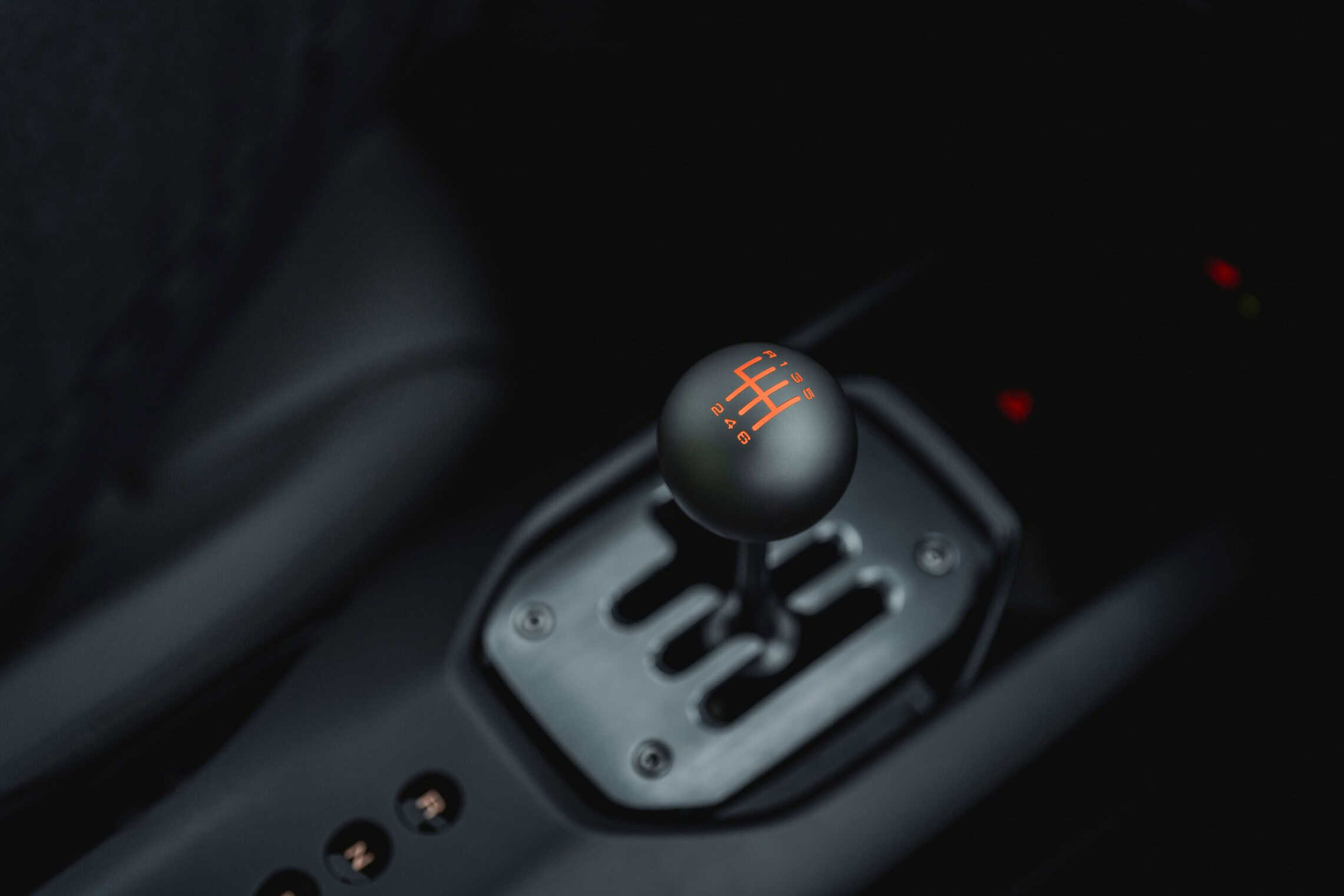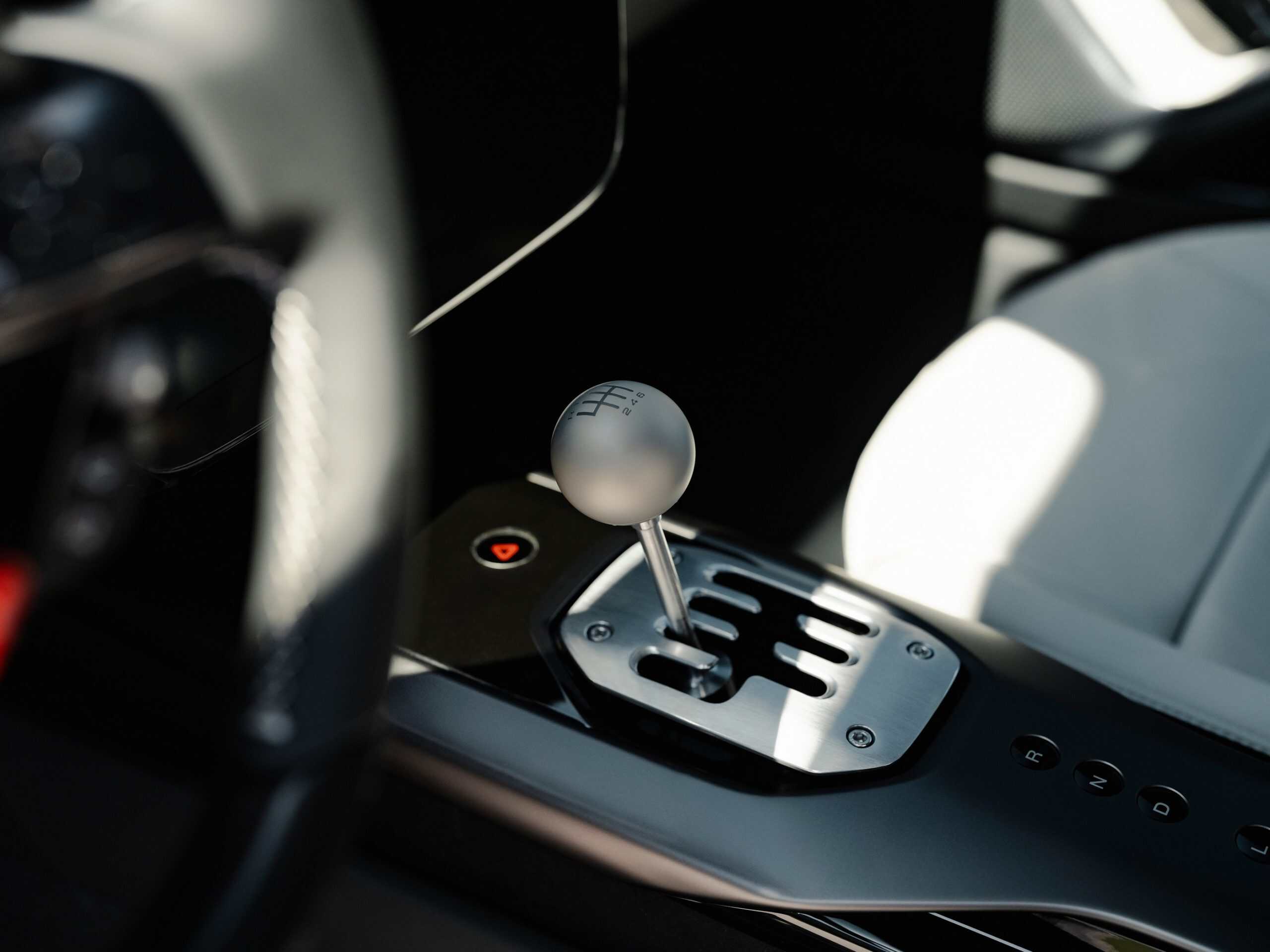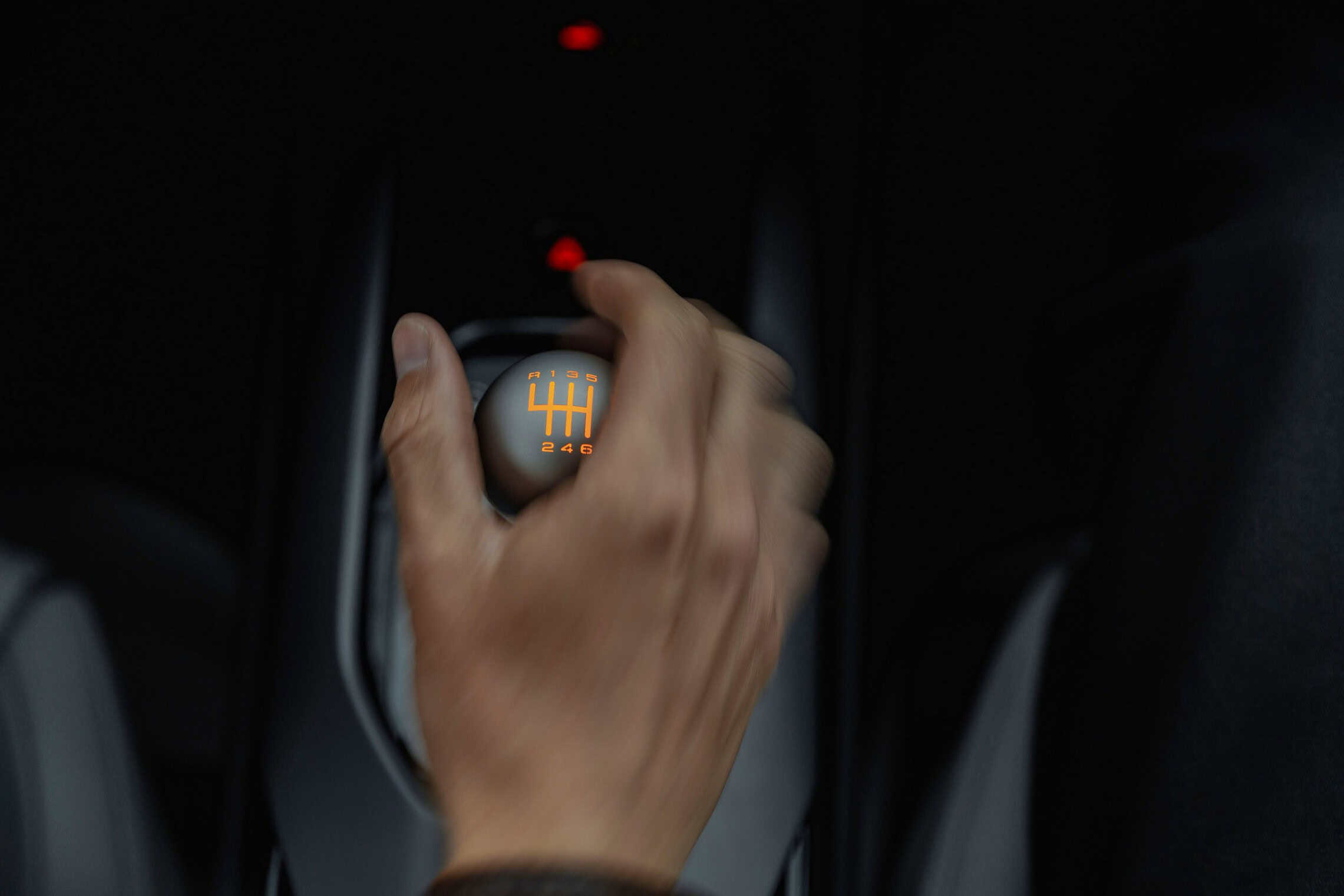
BMW has made it clear that keeping the manual gearbox alive is becoming increasingly difficult. Demand remains strong in the United States, but a shrinking pool of suppliers, increasingly complex driver-assistance systems, and the spread of 48-volt mild-hybrid technology are making it harder for M to offer three pedals. So, should M take a page out of Ferrari’s book and fake it?
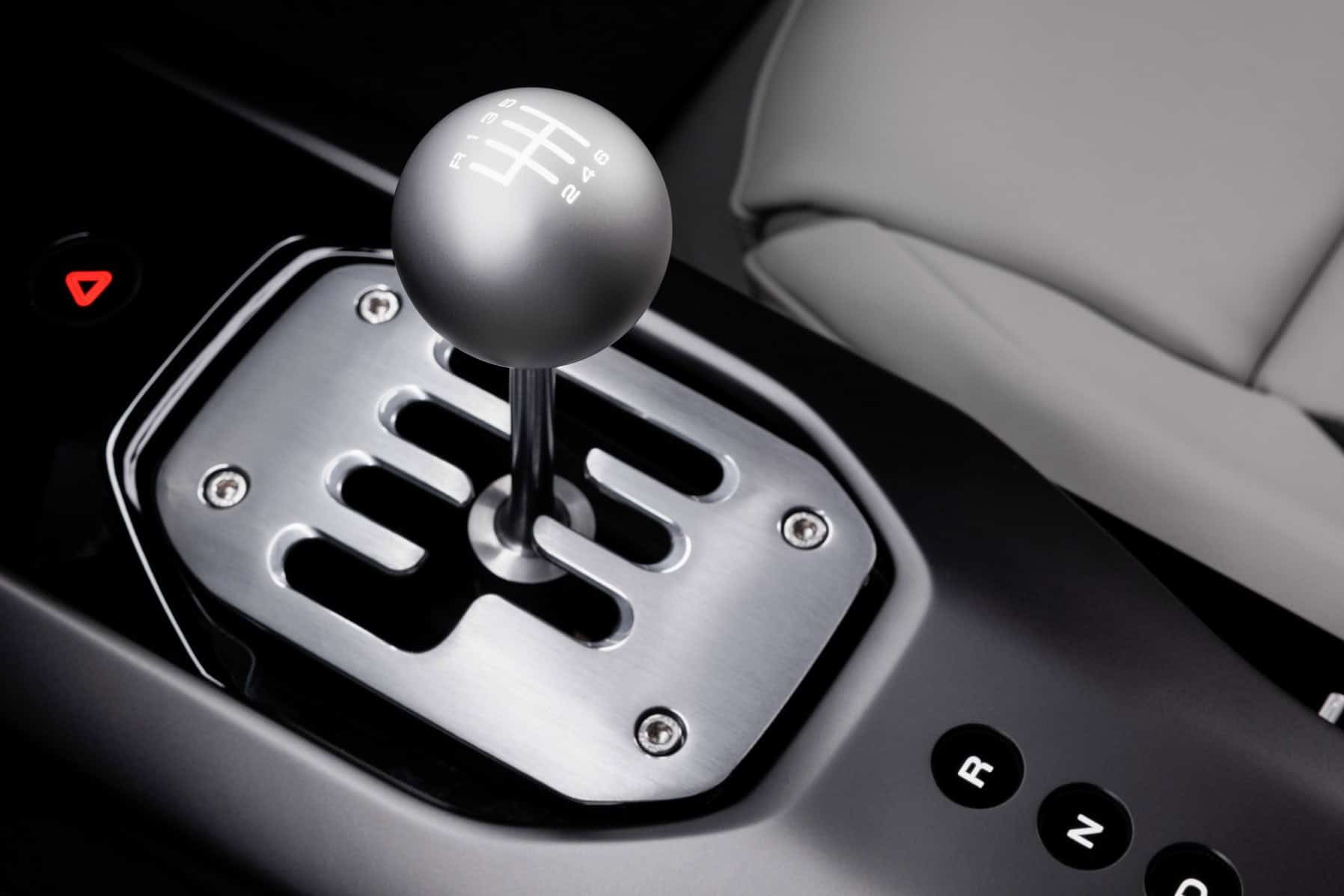
The limited-production 12Cilindri Manuale takes that idea to an extreme. It combines a gated shifter and clutch pedal with an eight-speed dual-clutch transmission, using electronic controls to recreate the feel of a traditional manual. The result isn’t a conventional stick shift, but it gives drivers a more tactile, engaging way to interact with the car.
Neither the gated shifter nor the third pedal is mechanically connected to the gearbox. Instead, sensors and software translate the driver’s inputs into electronic commands. Ferrari has even engineered realistic resistance and feedback into the shifter and clutch pedal, letting drivers stall the car or botch a launch like a conventional manual.
In manual mode, the system uses the DCT’s first six gears, leaving the top two ratios for automatic driving. It’s a clever way to preserve the involvement of a traditional stick shift without sacrificing the convenience of an automatic. Of course, it’s also much cheaper than engineering an actual manual transmission.
BMW Has A Real Problem With Manual Gearboxes
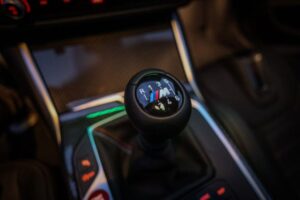
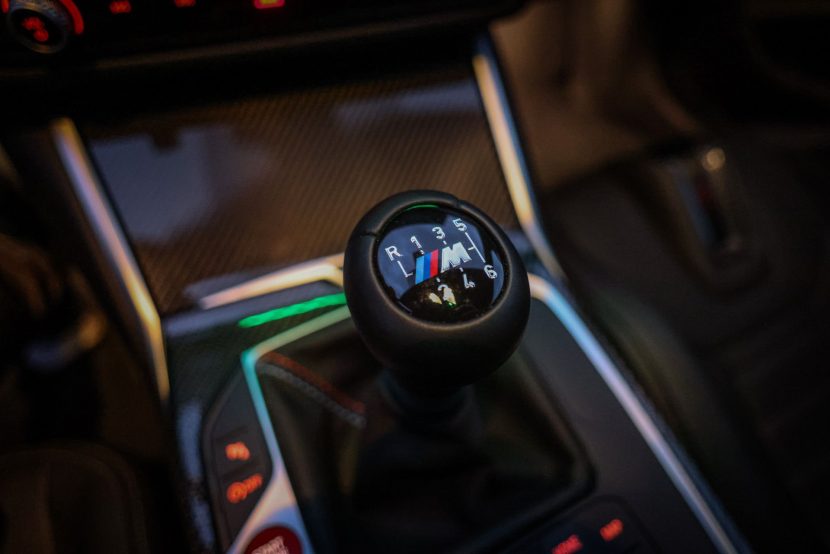
While Ferrari ditched the manual over a decade ago, BMW still has a stick shift. However, BMW M CEO Frank van Meel recently suggested in an exclusive interview at the BMW M Festival in Shanghai that the writing is on the wall for the traditional six-speed. Keeping the manual alive is becoming “really difficult,” and several factors are contributing to its gradual demise.
For starters, the number of suppliers willing to develop and manufacture manual transmissions keeps dwindling, making it increasingly hard to justify the investment for a relatively small number of cars. At the same time, BMW’s engines are getting more powerful, and the existing six-speed gearbox has limitations in handling the torque produced by modern M cars.
Then there’s electrification. Van Meel specifically pointed to 48-volt mild-hybrid systems as another obstacle, explaining that BMW’s current setup doesn’t support this technology with a manual transmission. That presents a problem for future performance cars expected to adopt mild-hybrid assistance to meet increasingly stringent emissions regulations. As we previously reported, the next-generation M3 (G84) is expected to use an evolution of the twin-turbocharged 3.0-liter inline-six engine, complete with 48-volt technology.
Advanced driver-assistance systems are another headache. As BMW integrates more technology into its cars, accommodating these systems alongside a traditional manual gearbox becomes more complicated. Many of these systems are designed primarily around automatic transmissions, and as complexity increases, making them work with manuals becomes increasingly difficult.
In other words, BMW isn’t simply refusing to give enthusiasts what they want. A growing list of technical and financial reasons makes offering a manual harder to justify.
Demand Isn’t The Only Problem
That doesn’t mean buyers have completely lost interest in rowing their own gears. Roughly half of the M2s sold in the United States still have a stick. The manual remains particularly appealing in North America, where BMW M continues to cater to enthusiasts who value driver involvement over outright performance.
The problem is that a healthy take rate on a handful of models doesn’t necessarily justify developing an entirely new transmission for the future. With the G80 M3 nearing the end of its run, the list of manual-equipped BMWs keeps shrinking. With the Z4 M40i out of the picture, the M2, M3, and M4 are the final holdouts, and the coupes are expected to carry the manual torch for the rest of the decade. What happens next is anyone’s guess.
For what it’s worth, BMW has repeatedly promised to keep the manual alive for as long as possible. And while M deserves credit for keeping three pedals when many competitors have abandoned them, enthusiasts can’t expect the company to develop a bespoke transmission indefinitely for a shrinking niche.
That Raises The Next Question: Should BMW Fake A Manual?
Personally, I’d like to see BMW explore the idea. It’s better than nothing, right? Of course, some would argue it’s sacrilegious and that if the manual’s time is up, it shouldn’t be kept on life support with software trickery. But a simulated manual could offer selectable virtual gears, a convincing shift pattern, a physical shifter, and perhaps even a clutch pedal that changes how the car responds to driver inputs.
The goal shouldn’t be to fool anyone into believing they’re actually controlling a conventional gearbox. Instead, BMW could offer it as a driving mode that prioritizes engagement over acceleration times. Drivers who want maximum performance could leave the system switched off, while those who miss the involvement of changing gears could enjoy a more interactive experience.
Of course, a simulated gearbox shouldn’t become an excuse to abandon the real thing prematurely. As long as customers are willing to buy manual M cars, BMW should keep offering them where technically and financially feasible. A software-generated substitute can’t replicate every aspect of a genuine manual transmission, particularly the satisfaction of working a clutch and shifting physical gears.
But if the choice eventually comes down to having no manual option at all or offering a convincing simulation, I’d rather BMW give enthusiasts another way to engage with their cars.
The Manual Isn’t Dead Yet, But BMW Needs A Plan
BMW M still has time to figure things out, and the company hasn’t ruled out future solutions. However, constraints generated by stricter regulations, electrification, rising torque outputs, and fewer transmission suppliers won’t magically disappear. A fake manual won’t satisfy every purist, and it shouldn’t have to. The real question is whether BMW can preserve the spirit of a manual gearbox even when the hardware itself becomes impractical.
If Ferrari can make electronic controls feel mechanical, BMW should at least explore what it can do with its own performance cars. After all, driving enjoyment is about more than setting the fastest lap or reaching 60 mph in the shortest time possible. And if the alternative is a future where every M car shifts itself, a little artificial involvement might not be so bad.
BMW has already confirmed that its upcoming electric M3 (ZA0) will feature simulated gear shifts, so Munich is already experimenting with ways to make an EV feel more like a traditional performance car. Could some of those lessons eventually apply to a combustion-powered M car in a post-manual era
First published by https://www.bmwblog.com