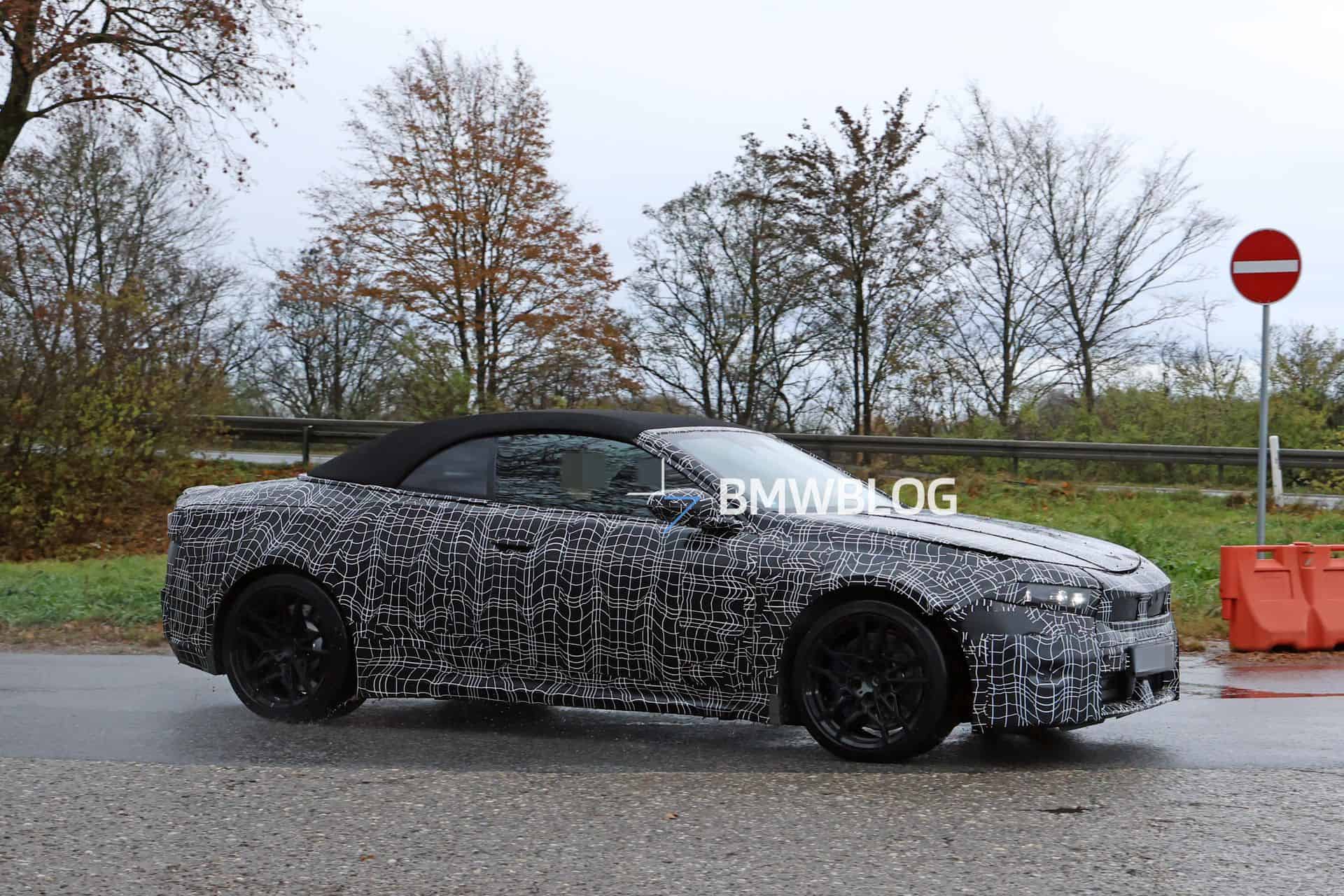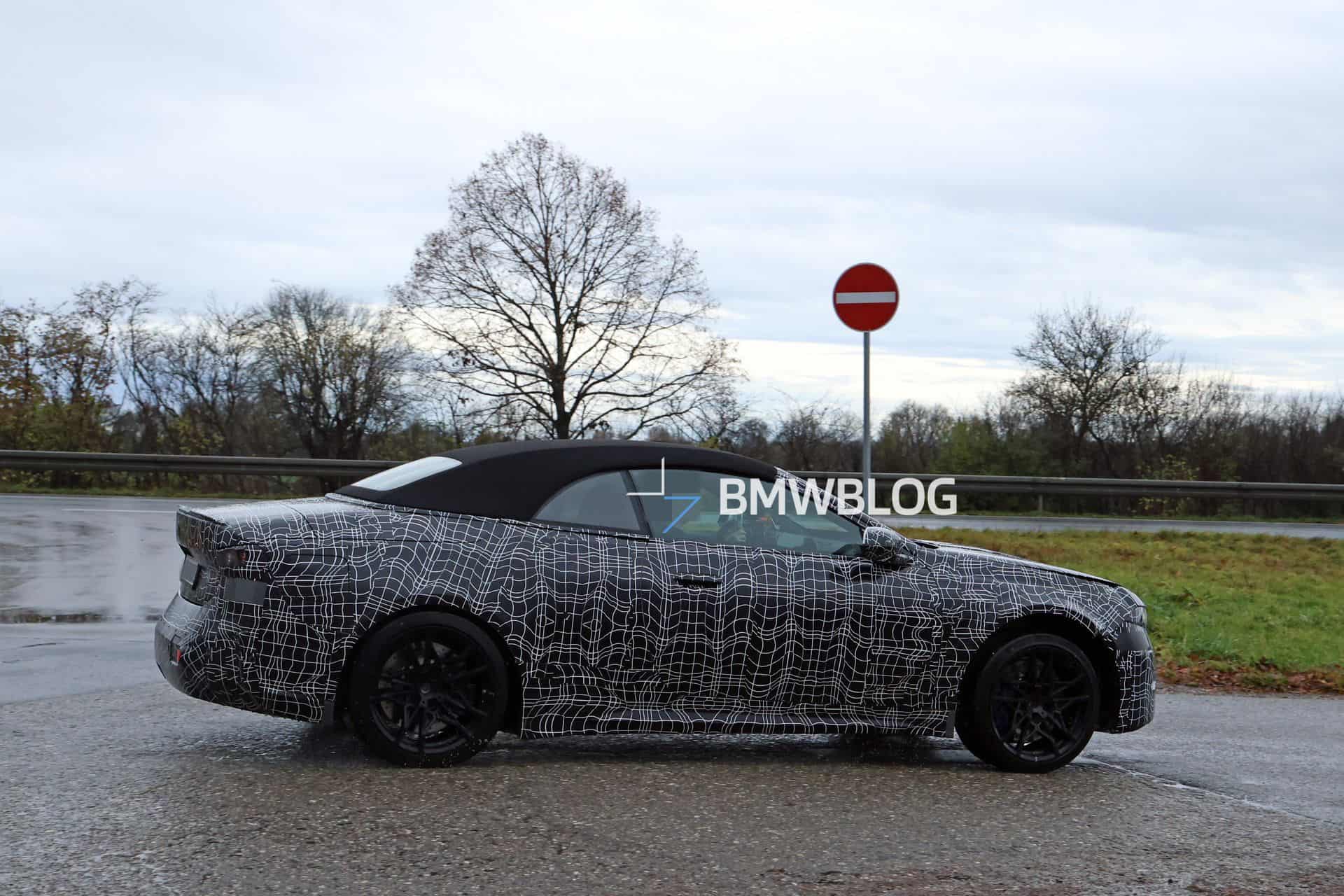
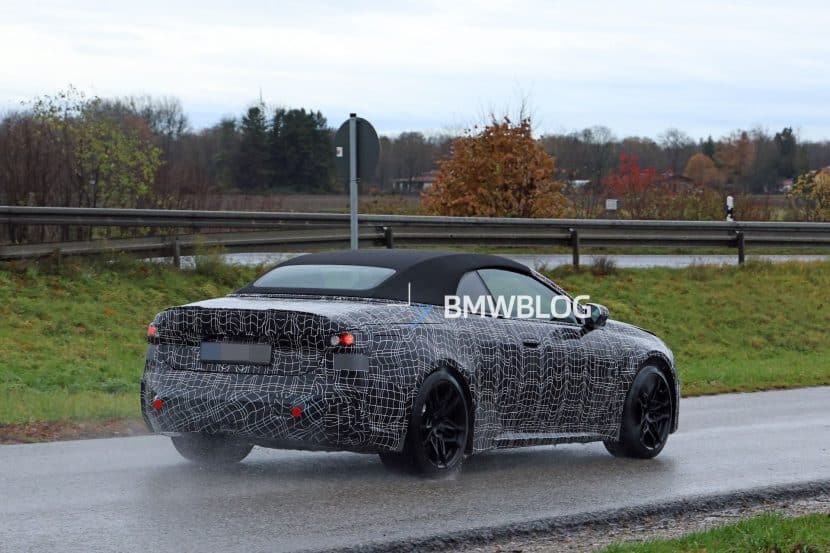
BMW’s car paparazzi may have caught something rather interesting this week. A heavily camouflaged prototype was spotted testing in Germany, and it appears to be a high-performance version of the upcoming electric i4 Convertible. Could we be looking at the first-ever electric M4 Convertible, reportedly carrying the internal codename ZA3? It’s certainly a possibility, although we’d be careful about jumping to conclusions just yet.
The prototype has several M-inspired features, but the jury is still out on whether we’re looking at an M Performance model or a full-fat M car. Either way, BMW seems determined to expand its electric Neue Klasse lineup beyond sedans and SUVs. Aside from the already confirmed i3 Touring and an i1 hatchback, an open-top performance EV would be an interesting addition, particularly at a time when the number of electric convertibles on the market remains remarkably small.
There are good reasons to believe BMW is developing a hotter version of the i4 Convertible. Compared with the regular prototype photographed earlier this year, the latest test car wears beefier brakes, larger wheels, and a small spoiler lip on the trunk lid. Its seemingly wider wheel arches also suggest a wider track, while the camouflage hides much of the production bodywork.
Four Electric Motors With Over 800 Horsepower
If BMW gives the electric M4 Convertible the full M treatment, it could borrow its powertrain from the upcoming electric M3 sedan (ZA0). BMW has already outlined the technical foundations of its next-generation electric M cars, confirming a quad-motor configuration with one electric motor driving each wheel.
The system uses two electric drive units, one on each axle, allowing the car to distribute torque individually to all four wheels. Even more interestingly, BMW can completely disconnect the front axle when conditions allow, effectively giving its electric M cars rear-wheel-drive characteristics.
The electric M3 is expected to deliver approximately 838 hp and a rather ludicrous 885 lb-ft (1,200 Nm) of torque. Those are preliminary figures, but they give us an idea of what a full-fat electric M4 Convertible could bring to the table. Don’t expect the drop-top to be any less outrageous if it gets the same hardware.
Simulated Gear Changes And Sounds Are Coming To Electric M Cars
BMW’s M-specific electric drivetrain will also bring simulated gear changes intended to make the transition to electric propulsion less sterile, addressing some of the concerns enthusiasts have about performance EVs. Artificial engine sounds are also planned for the M3, and we wouldn’t be surprised if the M4 gets a unique soundscape better suited to open-top driving.
One thing the spy shots appear to confirm is that BMW isn’t planning to bring back the elaborate folding metal roof used by the old 4 Series Convertible (F33). Instead, the electric drop-top will use a conventional fabric roof, just like the current G23. It folds away into a dedicated compartment behind the rear seats, preserving the traditional cabriolet silhouette. That’s arguably the more sensible solution for an electric performance car.
An Electric M4 Convertible Will Be Inevitably Heavy
A retractable hardtop would add considerable weight and complexity to a vehicle already carrying a substantial 100-kWh dedicated battery pack. Keeping the roof fabric should help limit the weight penalty and lower the center of gravity. As for how heavy the car will be, we can only speculate. The i3 50 xDrive, in First Edition configuration for the European market, tips the scales at 2,205 kilograms (4,861 pounds), but the M3 will likely weigh more. An M4 Convertible would be heavier still, given the additional reinforcements needed after chopping off the fixed metal roof.
The car should retain a 2+2 seating arrangement, although rear-seat accommodation remains an important question. A dedicated EV architecture could let BMW stretch the wheelbase compared with the combustion-powered 4 Series Convertible, potentially creating more room for passengers in the back. We wouldn’t expect miracles, though. Four adults will still have to negotiate the usual compromises associated with convertibles, regardless of their powertrain.
Although the prototype is fully camouflaged, we aren’t expecting anything extraordinary in terms of styling. The front fascia will likely carry over from the M3 with minimal changes, while the biggest differences should appear behind the A-pillars. We can already get a sense of what the finished car might look like once the disguise comes off, although the headlights and taillights seen on the prototype are clearly temporary units.
This i4 Convertible Prototype Has The Old Door Handle Design
Interestingly, the test car has the now-old door handle design, with a semi-enclosed look, instead of the electrically operated pop-out setup used by Neue Klasse models. However, it’s unclear whether this is the final design or simply a placeholder until more evolved prototypes switch to production-ready bodywork. For what it’s worth, the new long-wheelbase i3 and iX3 for China also use this door handle design because a new safety regulation effectively bans flush door handles.
Inside, BMW will likely carry over the dashboard layout to keep costs in check. Every automaker does this to some extent, so we can’t really blame Munich for following suit. With a two-door i4 Coupe (NA2) likely in the mix, alongside an electric M4 Coupe (ZA2), we’ll see much more of the company’s new iDrive X, where less is seemingly more.
Look for the standard i4 Convertible to arrive in 2028, with its M sidekick likely not far behind. We’d imagine BMW will launch the equivalent coupes roughly around the same time. Both body styles should also get the M Lite treatment by spawning i4 M60 flavors.
First published by https://www.bmwblog.com