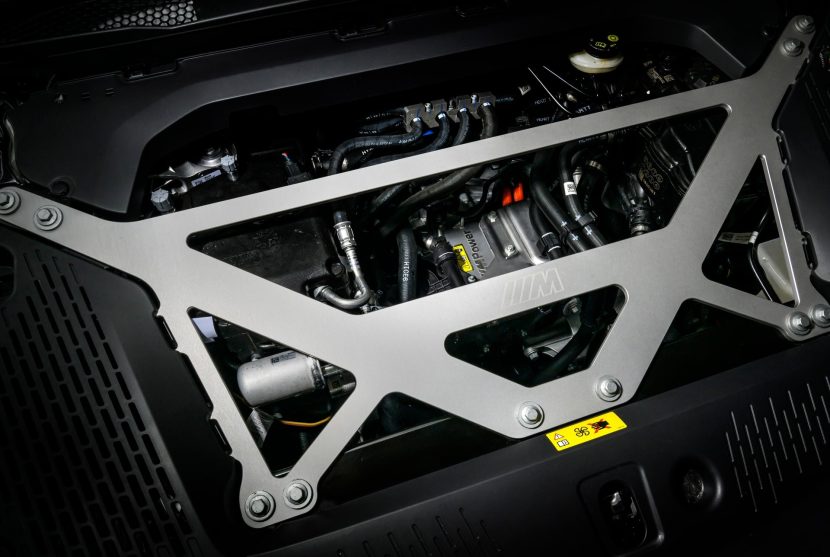
Most discussions surrounding M cars inevitably revolve around performance, horsepower, lap times, and handling. We’re taking a different approach this time by focusing on practicality. The upcoming electric M3 (ZA0) brings a not-so-subtle change compared with the standard i3 (NA5). Yes, it ditches the front trunk.
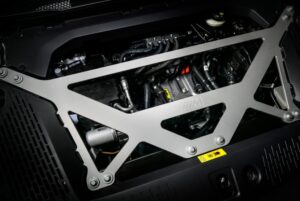
In its place is a substantial aluminum reinforcement brace. Apparently, making room for extra chassis hardware takes priority over having somewhere to store your charging cables. That’s a compromise most potential buyers will probably happily make, given how the M3 ZA0 is shaping up to be a real monster.
Of course, the strut brace isn’t there just for show. The intricate metal structure serves a functional purpose by helping stiffen the front end of the car. It connects structural points across the front section of the chassis, helping limit flex when the suspension is subjected to high loads. That matters in a car expected to deliver substantially more performance than the standard i3.
The Electric M3 Trades Storage Space For Serious Chassis Hardware
The idea is relatively straightforward: a stiffer body gives the suspension a more stable foundation to work from. By reducing unwanted flex, BMW M can better control wheel movements and fine-tune the suspension for more predictable handling, particularly during demanding track driving.
It’s an extensive engineering exercise for a car with four electric motors, one driving each wheel. With preliminary specifications calling for approximately 838 hp and 885 lb-ft (1,200 Nm), the ZA0 needs all the structural support it can get.
The strut brace stretches across the front compartment, occupying space that would otherwise be available for luggage or charging accessories. It’s another example of BMW M prioritizing performance over practicality, even if the sacrificed storage area is relatively modest.
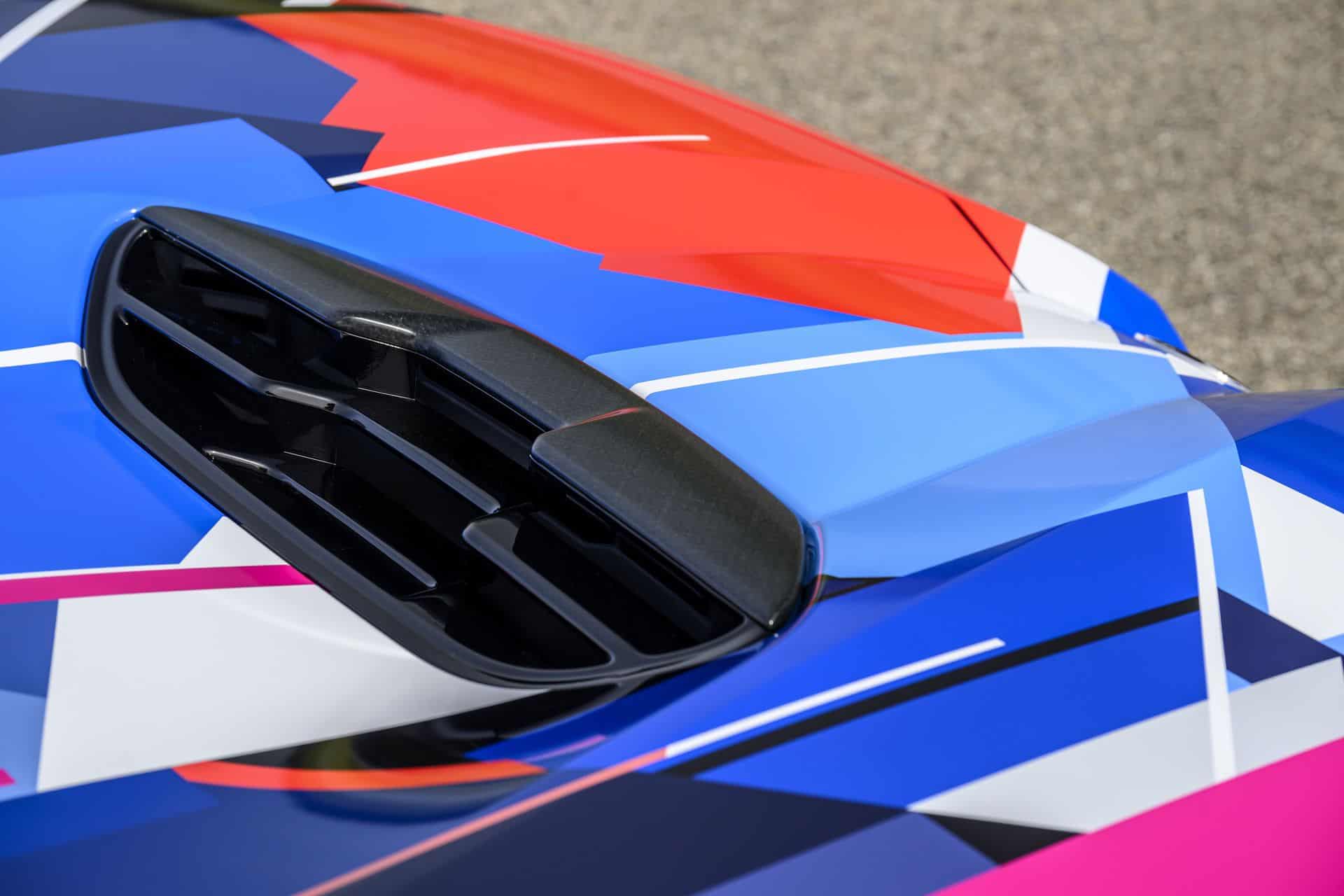
It’s not the only packaging compromise, either. The electric M3 gets a dedicated cooling setup and a functional hood vent made from flax-based natural fiber composites, further distinguishing it from the regular electric sedan.
Eagle-eyed readers will also spot an M Power logo on the hardware underneath the strut brace. It’s a small but meaningful detail that shows BMW M intends to keep its retro-flavored badging even at the dawn of the electric era.
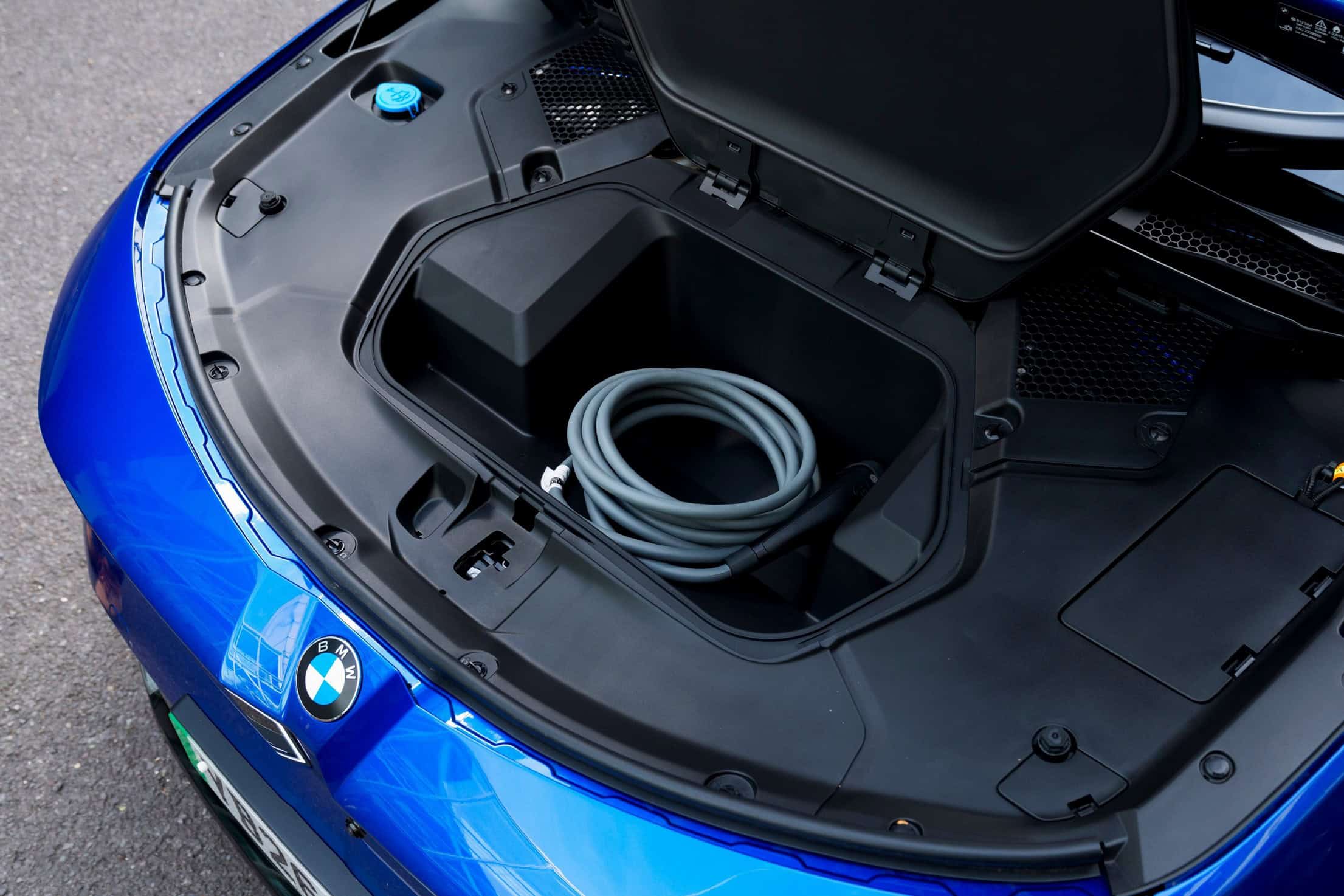
The New i3 Brings Back The BMW Frunk
As a refresher, the regular i3’s front trunk isn’t particularly generous, offering just 31 liters (1.1 cubic feet) of storage. That’s enough room for charging cables and perhaps a few smaller items, but don’t expect to fit an overnight bag. For comparison, the larger iX3 offers 58 liters (2 cubic feet) under the hood. We’re already wondering whether the X3 M will also lose its extra cargo compartment.
Knowing that the M3 won’t have a front trunk, we wouldn’t hold our breath for the X3 M to retain one either. The same probably applies to a potential electric M3 Touring and the return of the X4 M as a high-performance EV. All three models would likely need additional chassis reinforcement and dedicated hardware to cope with the extra performance, potentially leaving little room for a useful storage compartment under the hood.
BMW M seems willing to sacrifice some everyday practicality to meet its performance targets, and the frunk might be another casualty of that philosophy.
First published by https://www.bmwblog.com