
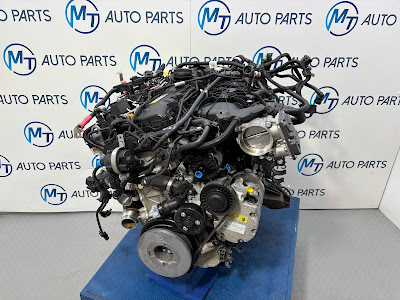
**Comparison of BMW N57 and M57 Engines: Identifying the Preferred Choice**
The BMW N57 and M57 engines are integral components of BMW’s diesel engine lineup, celebrated for their performance, efficiency, and dependability. Although both engines have been featured in various BMW models, they address slightly different requirements and tastes. This article explores the details of each engine to establish which may be the preferred choice for potential buyers or enthusiasts.
**Overview of the M57 Engine:**
Launched in 1998, the M57 engine has been a crucial part of BMW’s diesel offerings. It is a straight-six diesel engine noted for its strength and reliability. The M57 has been utilized across a diverse array of BMW vehicles, such as the 3 Series, 5 Series, 7 Series, X3, X5, and X6. It has also been incorporated in certain Land Rover models.
Prominent features of the M57 engine consist of:
– Displacement options varying between 2.5 to 3.0 liters.
– Turbocharged with a common rail direct fuel injection system.
– Recognized for its longevity and durability.
– Provides an equilibrium of power and fuel efficiency.
**Overview of the N57 Engine:**
The N57 engine followed the M57 and made its debut in 2008. It signifies a more contemporary approach to diesel engine engineering, integrating state-of-the-art technology to enhance performance and efficiency. The N57 has been leveraged in the same BMW models as the M57, including the 3 Series, 5 Series, 7 Series, X3, X5, and X6.
Key features of the N57 engine include:
– Displacement of 3.0 liters with multiple power outputs.
– Features a twin-turbo or tri-turbo arrangement for improved performance.
– Includes a more sophisticated common rail direct fuel injection system.
– Enhanced fuel efficiency and reduced emissions in comparison to the M57.
– Celebrated for its smooth power delivery and refined performance.
**Performance Comparison:**
In terms of performance, the N57 typically delivers greater power and torque values due to its advanced turbocharging configurations. The tri-turbo variant of the N57 can generate considerably more horsepower and torque than the most powerful M57 versions. This makes the N57 more appealing for those desiring a sportier driving experience with faster acceleration and elevated top speeds.
**Efficiency and Emissions:**
The N57 engine is engineered with contemporary emissions regulations in focus, providing superior fuel efficiency and diminished emissions relative to the M57. This is accomplished through enhancements in fuel injection technology and turbocharging. For environmentally aware consumers or those wishing to cut fuel expenses, the N57 emerges as the more appealing choice.
**Reliability and Maintenance:**
Both engines are acclaimed for their reliability, though the M57 enjoys a longer history because of its earlier launch. It is frequently lauded for its tough design and straightforward structure, which may lead to easier maintenance and potentially reduced repair expenses. Conversely, the N57, while also dependable, incorporates more intricate technology that could necessitate more specialized upkeep.
**Conclusion:**
Choosing the preferable option between the BMW N57 and M57 engines primarily hinges on personal priorities. The N57 boasts superior performance, efficiency, and emissions, making it perfect for those in pursuit of a modern, high-performing diesel engine. However, the M57’s status for durability and simplicity could attract those who value long-term reliability and straightforward maintenance. Ultimately, both engines possess their advantages, and the decision will rest on the unique needs and preferences of the buyer.