BMW M has a clandestine garage. We had the chance to explore it in 2011. Within its walls lie four prototypes that never saw mass production: a V8 M3, a distinctive V10 M5, a V10 M6, and a lightweight M2. Each was crafted, evaluated, and ultimately cast aside. All had promise. So, which of these should truly have been introduced to the market?
The M5 CSL V10 is frequently mentioned as the crowd favorite — boasting 630 horsepower, 8,750 rpm, and weighing 150 kilograms less than the standard variant, it could conquer the Nürburgring in 7:50, surpassing nearly everything available then. The M6 CSL V10 puts forth a similar case, equipped with active aerodynamics, a retracting front spoiler, and the double-strut mirrors that became emblematic of later M models. The M2 CSL F87 is celebrated by purists for delivering 450 horsepower in the lightest and most compact M car of its time, essentially a more aggressive version of the M2 CS. All are worthy contenders, but none represent the unequivocal choice.
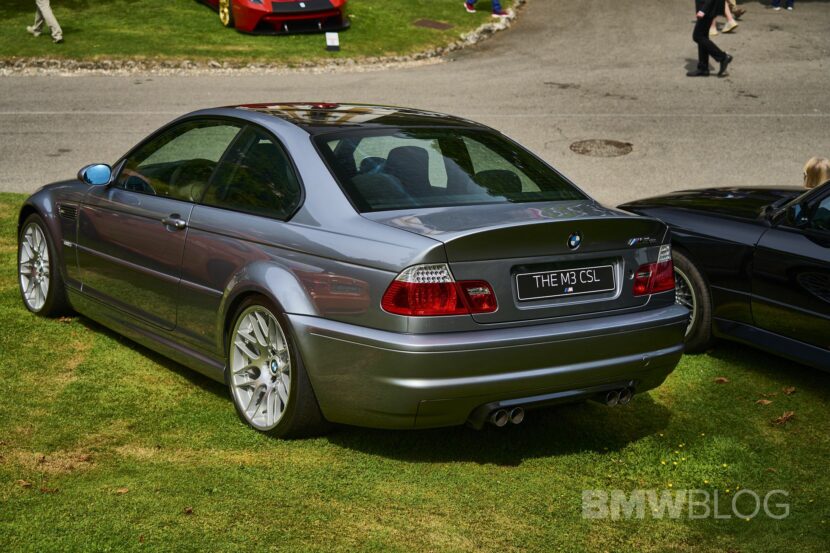
The definitive choice is the E46 M3 CSL V8.
A CSL Already Crafted Perfectly
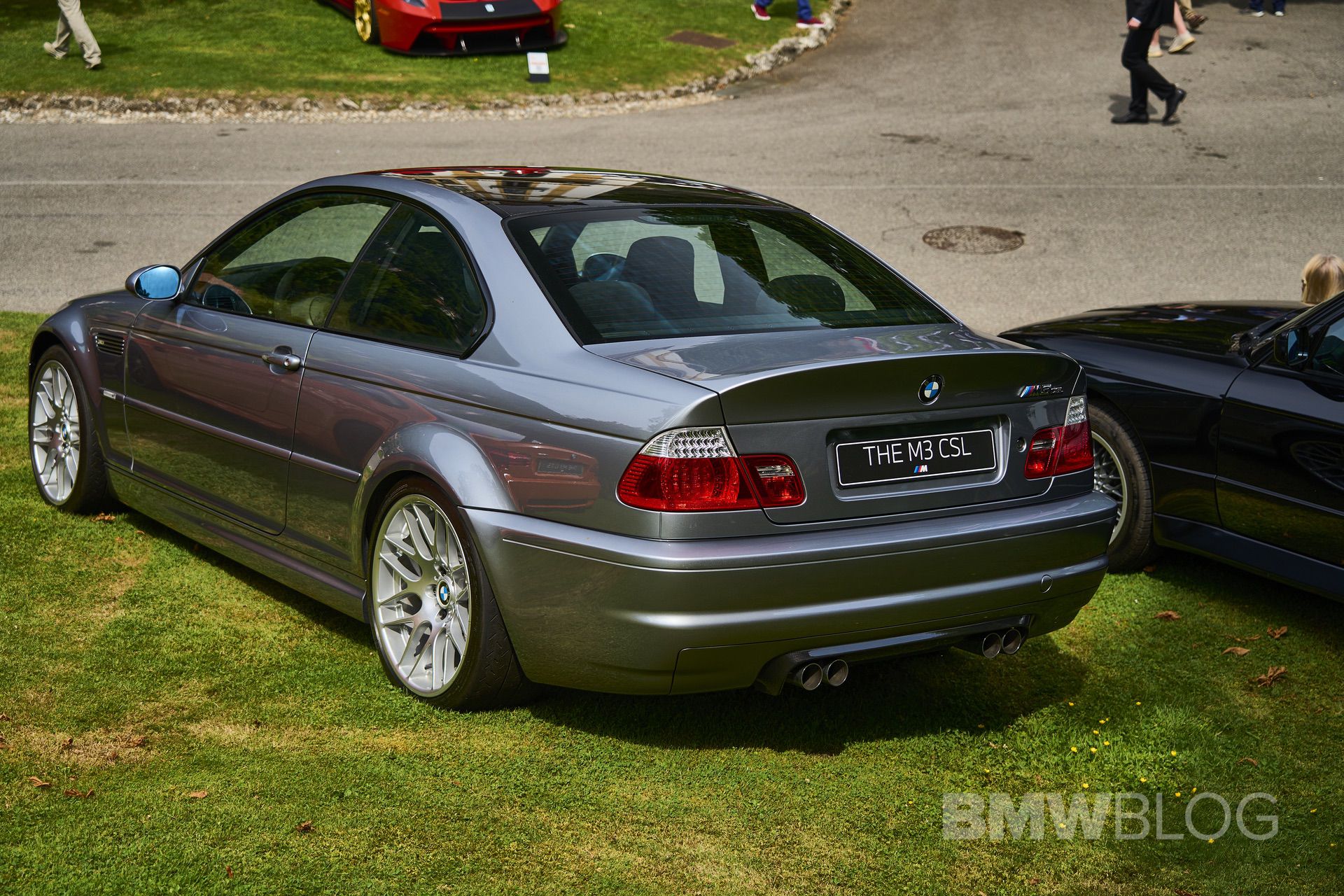
By 2003, the M3 CSL accomplished what was deemed unattainable. It enhanced the E46 M3 — already deemed the ultimate driving experience — with a carbon fiber roof, removed door cards, and a eliminated rear bench. The modified S54 engine revved to 8,000 rpm, generating 360 horsepower, and the vehicle weighed 1,385 kilograms. The steering offered an unparalleled connection to the front tires, allowing it to lap the Nürburgring in 7 minutes and 50 seconds in 2003.
Critics universally lauded it as the pinnacle M car BMW had ever made, with some even asserting it was the best. Yet, the engineers at Garching, unwilling to leave perfection untouched, speculated a compelling question: what if it were equipped with a V8?
The Phantom in the Garage
BMW M created a V8 M3 CSL but never introduced it to consumers. Most people are unaware of its presence. The prototype, dubbed the S65VB40, was built from a press-fleet CSL after fulfilling its media obligations. The engine, based on the S62 — the 4.9-liter V8 from the E39 M5 and Z8 — was not merely an engine swap; it was a high-revving 4.0-liter variant generating 430 horsepower, aimed at performance rather than torque.
The V8 demanded greater airflow than the inline-six. While the standard CSL had one aperture in the lower bumper, this prototype required two. The team meticulously crafted a new bumper cover to accommodate this modification — the only visible sign of its distinctions. Inside, it preserved the CSL's traits: full bucket seats, a lightweight center console, and a stripped-down design for weight reduction. The prototype was 110 kilograms lighter than the regular M3, although the extra weight from the V8 added back some mass.
Ultimately, it remained a singular creation. The lessons learned from this prototype influenced the S85 V10 for the E60 M5 and directly shaped the S65 V8 that powered the E90/E92/E93 M3 starting in 2007, which produced 414 horsepower and revved to 8,300 rpm — one of BMW M's most remarkable engines. The prototype
BMW M has a clandestine garage. We had the chance to explore it in 2011. Within its walls lie four prototypes that never saw mass production: a V8 M3, a distinctive V10 M5, a V10 M6, and a lightweight M2. Each was crafted, evaluated, and ultimately cast aside. All had promise. So, which of these should truly have been introduced to the market?
The M5 CSL V10 is frequently mentioned as the crowd favorite — boasting 630 horsepower, 8,750 rpm, and weighing 150 kilograms less than the standard variant, it could conquer the Nürburgring in 7:50, surpassing nearly everything available then. The M6 CSL V10 puts forth a similar case, equipped with active aerodynamics, a retracting front spoiler, and the double-strut mirrors that became emblematic of later M models. The M2 CSL F87 is celebrated by purists for delivering 450 horsepower in the lightest and most compact M car of its time, essentially a more aggressive version of the M2 CS. All are worthy contenders, but none represent the unequivocal choice.
The definitive choice is the E46 M3 CSL V8.
A CSL Already Crafted Perfectly
By 2003, the M3 CSL accomplished what was deemed unattainable. It enhanced the E46 M3 — already deemed the ultimate driving experience — with a carbon fiber roof, removed door cards, and a eliminated rear bench. The modified S54 engine revved to 8,000 rpm, generating 360 horsepower, and the vehicle weighed 1,385 kilograms. The steering offered an unparalleled connection to the front tires, allowing it to lap the Nürburgring in 7 minutes and 50 seconds in 2003.
Critics universally lauded it as the pinnacle M car BMW had ever made, with some even asserting it was the best. Yet, the engineers at Garching, unwilling to leave perfection untouched, speculated a compelling question: what if it were equipped with a V8?
The Phantom in the Garage
BMW M created a V8 M3 CSL but never introduced it to consumers. Most people are unaware of its presence. The prototype, dubbed the S65VB40, was built from a press-fleet CSL after fulfilling its media obligations. The engine, based on the S62 — the 4.9-liter V8 from the E39 M5 and Z8 — was not merely an engine swap; it was a high-revving 4.0-liter variant generating 430 horsepower, aimed at performance rather than torque.
The V8 demanded greater airflow than the inline-six. While the standard CSL had one aperture in the lower bumper, this prototype required two. The team meticulously crafted a new bumper cover to accommodate this modification — the only visible sign of its distinctions. Inside, it preserved the CSL’s traits: full bucket seats, a lightweight center console, and a stripped-down design for weight reduction. The prototype was 110 kilograms lighter than the regular M3, although the extra weight from the V8 added back some mass.
Ultimately, it remained a singular creation. The lessons learned from this prototype influenced the S85 V10 for the E60 M5 and directly shaped the S65 V8 that powered the E90/E92/E93 M3 starting in 2007, which produced 414 horsepower and revved to 8,300 rpm — one of BMW M’s most remarkable engines. The prototype