Article Overview
- The enhanced twin-turbo 3.0-liter engine will make its first appearance in the M2, M3, and M4 this year.
- BMW minimizes fuel consumption while retaining performance, ensuring the same power output.
- This six-cylinder engine complies with the Euro 7 emissions standard, which takes effect in November.
Years back, M pledged to safeguard the inline-six engine's future despite tough EU emissions standards. With Euro 7 on the horizon, BMW's performance sector is upholding that commitment. The “S58” engine designated for the M2, M3, and M4 is poised for an exciting future, thanks to innovative engine tech patented in 2024 that will soon be integrated into production models.
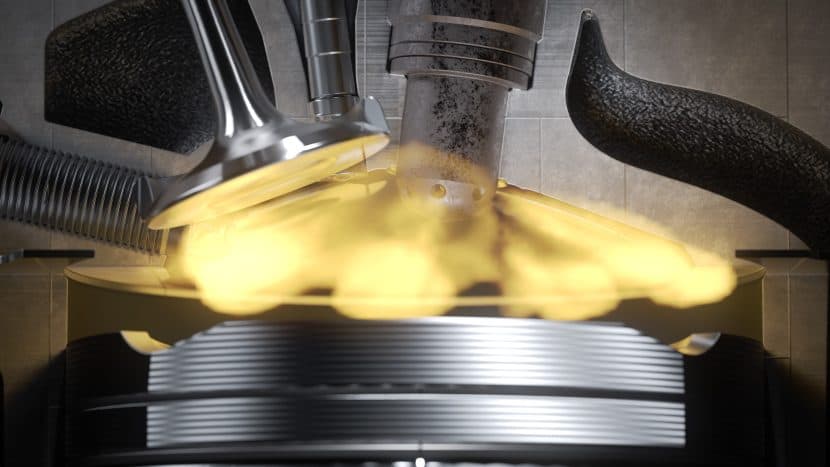
BMW M Ignite denotes a pre-chamber ignition system drawing inspiration from motorsport. The forthcoming twin-turbo 3.0-liter engine will feature a pre-chamber in the cylinder head, linked to the primary combustion chamber through overflow channels. This configuration includes its own spark plug and ignition coil, thus creating two ignition systems for the six-cylinder unit.
The process works as follows: at lower to medium engine speeds, the standard spark plug in the combustion chamber ignites first, followed by the pre-chamber spark plug at higher RPMs. Moreover, some of the fuel-air mixture ignites in the pre-chamber, with BMW indicating that the flames exit at “approximately the speed of sound.”
This ignition technique enables simultaneous ignition within the main combustion chamber, leading to quicker combustion. Coupled with an increased compression ratio and turbochargers featuring variable turbine geometry, fuel efficiency experiences marked enhancement, particularly under heavy loads such as on a racetrack.
The M3 and M4 will be the pioneers to employ BMW M Ignite, with production commencing in July. The M2 will follow a month later, just prior to the Euro 7 implementation in November. Notably, the decrease in fuel consumption does not diminish performance, as the S58 continues to uphold its power output, in contrast to the larger S68.
BMW M’s Inline-Six Engine Maintains Power, While the V8 is De-tuned
To summarize, BMW has lowered the output of the twin-turbo 4.4-liter V8 utilized in the M5 and XM in Europe. Since March, the gasoline engine generates 41 less horsepower to conform to Euro 7 standards. However, the electric motor in the sedan/wagon and SUV has now become more potent, offsetting the V8's power reduction. Consequently, the overall power of V8 models remains unchanged, with the electric motor taking on an increased role. In markets outside Europe that do not follow EU regulations, the V8 remains unaffected.
With both the inline-six and V8 engines meeting Euro 7 standards, BMW can keep selling M cars in the EU for years. Upcoming models are expected to include the next-gen M3 (G84) for the six-cylinder and the X5 M (G95) for the eight-cylinder. Furthermore, the S68 will continue to appear in M Performance models, such as next year’s M760.
Article Overview
- The enhanced twin-turbo 3.0-liter engine will make its first appearance in the M2, M3, and M4 this year.
- BMW minimizes fuel consumption while retaining performance, ensuring the same power output.
- This six-cylinder engine complies with the Euro 7 emissions standard, which takes effect in November.
Years back, M pledged to safeguard the inline-six engine’s future despite tough EU emissions standards. With Euro 7 on the horizon, BMW’s performance sector is upholding that commitment. The “S58” engine designated for the M2, M3, and M4 is poised for an exciting future, thanks to innovative engine tech patented in 2024 that will soon be integrated into production models.
BMW M Ignite denotes a pre-chamber ignition system drawing inspiration from motorsport. The forthcoming twin-turbo 3.0-liter engine will feature a pre-chamber in the cylinder head, linked to the primary combustion chamber through overflow channels. This configuration includes its own spark plug and ignition coil, thus creating two ignition systems for the six-cylinder unit.
The process works as follows: at lower to medium engine speeds, the standard spark plug in the combustion chamber ignites first, followed by the pre-chamber spark plug at higher RPMs. Moreover, some of the fuel-air mixture ignites in the pre-chamber, with BMW indicating that the flames exit at “approximately the speed of sound.”
This ignition technique enables simultaneous ignition within the main combustion chamber, leading to quicker combustion. Coupled with an increased compression ratio and turbochargers featuring variable turbine geometry, fuel efficiency experiences marked enhancement, particularly under heavy loads such as on a racetrack.
The M3 and M4 will be the pioneers to employ BMW M Ignite, with production commencing in July. The M2 will follow a month later, just prior to the Euro 7 implementation in November. Notably, the decrease in fuel consumption does not diminish performance, as the S58 continues to uphold its power output, in contrast to the larger S68.
BMW M’s Inline-Six Engine Maintains Power, While the V8 is De-tuned
To summarize, BMW has lowered the output of the twin-turbo 4.4-liter V8 utilized in the M5 and XM in Europe. Since March, the gasoline engine generates 41 less horsepower to conform to Euro 7 standards. However, the electric motor in the sedan/wagon and SUV has now become more potent, offsetting the V8’s power reduction. Consequently, the overall power of V8 models remains unchanged, with the electric motor taking on an increased role. In markets outside Europe that do not follow EU regulations, the V8 remains unaffected.
With both the inline-six and V8 engines meeting Euro 7 standards, BMW can keep selling M cars in the EU for years. Upcoming models are expected to include the next-gen M3 (G84) for the six-cylinder and the X5 M (G95) for the eight-cylinder. Furthermore, the S68 will continue to appear in M Performance models, such as next year’s M760.