
Article Summary
- The redesigned Audi Q7 showcases a more modern aesthetic compared to the existing BMW X5, incorporating split headlights, a rear lightbar, optional 23-inch wheels, and sportier contours.
- Inside, the Q7 adopts current luxury SUV trends with a display for the passenger side, fewer physical controls, and available third-row seating.
- Standard quattro, accessible V8 engine, automatic doors, smart glass, and projection-style turn signals establish clear standards for BMW's upcoming X5.
Historically, the BMW X5 has been the preferred selection in the midsize luxury SUV segment, particularly for those who value driving performance in larger vehicles. However, Audi has made significant changes to the Q7, positioning it as a direct rival to the X5. With its more defined exterior, technology-laden interior, standard quattro, available V8 alternatives, three-row seating, and engaging tech features, the new Q7 makes the existing G05 X5 seem outdated. While the BMW isn't necessarily inferior, the juxtaposition of the Q7 and X5 is now more intriguing than ever. The pressing inquiry remains whether the revamped Q7 represents the kind of progression BMW needs for the forthcoming G65 X5.
Exterior Design
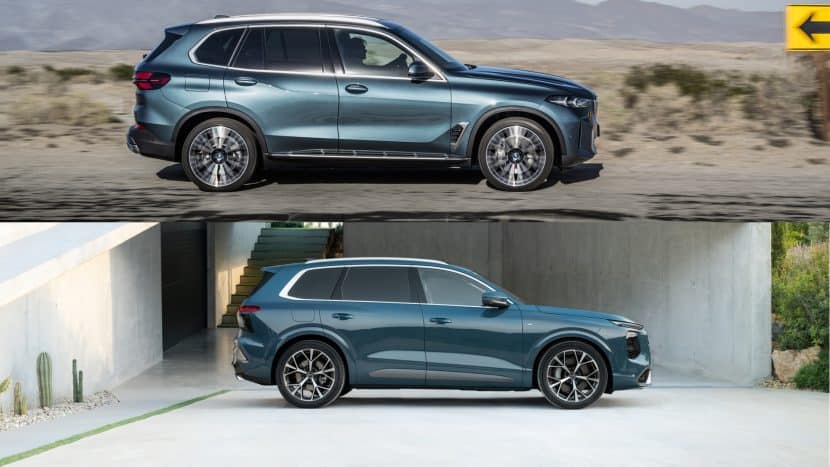
The newest Audi Q7 displays considerable enhancements from virtually every angle. The split headlights, similar to those on the X7, along with a rear lightbar that stretches across the hatchback immediately identify the Q7 as an updated model. An illuminated honeycomb grille is situated between the headlights, and for the first time, clients can opt for 23-inch wheels, while the current X5 is restricted to 22s. Importantly, the Q7 also reintroduces genuine exhaust tips.
Even though the current Q7 has been in circulation since 2017 and may appear outdated, it has consistently preserved an appealing, albeit unconventional, design. As an SUV, usability should be prioritized, and the latest Q7 undeniably presents a more contemporary look compared to the aging G05 X5, which has been on the market since August 2018. The new Q7 exhibits improved proportions, looking nimble in promotional visuals, and even appears dynamic alongside the sporty X5, a stark difference from its earlier version.
Interior Design
The Q7's interior reflects its exterior with a completely modern design. A screen for the passenger side and a nearly buttonless central console indicate its innovation. Despite Audi's recent design transformation, observed in the hybrid Nuvolari supercar, the Q7's design timeline did not coincide with this evolution. The outcome is a cabin filled with screens, which has turned into an industry expectation. While the G05 features less digital space, this may not hold true for the future G65. Overall, the materials and design in the new Q7 look impressive, and the rear comparison image makes it tough to differentiate between the X5 and Q7, which might be seen as a praise for both. Unlike the present X5, the Q7 does offer third-row seating.
Performance
The new Q7 provides a variety of engine options, all featuring standard quattro all-wheel drive. In Europe, purchasers can choose a standard turbo-diesel 3.0-liter V6, generating 295 horsepower and 500 Nm of torque, or a more torquey variant with 241 horsepower and 630 Nm. This mild hybrid engine is coupled with an eight-speed automatic transmission.
In the U.S., buyers can opt for more potent V6 and V8 engines that align with some of the X5's choices. The V6 is a twin-turbo gasoline engine producing 429 horsepower and 442 pound-feet (600 Nm) of torque. An optional V8, well-known to current Q7 enthusiasts, is a twin-turbo 4.0-liter unit providing 591 horsepower and 591 pound-feet (801 Nm) of torque, available in the SQ7, which also includes standard air suspension. Both the Q7 and SQ7 can tow up to 7,700 pounds, exceeding the current X5 by 500 pounds.
Article Summary
- The redesigned Audi Q7 showcases a more modern aesthetic compared to the existing BMW X5, incorporating split headlights, a rear lightbar, optional 23-inch wheels, and sportier contours.
- Inside, the Q7 adopts current luxury SUV trends with a display for the passenger side, fewer physical controls, and available third-row seating.
- Standard quattro, accessible V8 engine, automatic doors, smart glass, and projection-style turn signals establish clear standards for BMW’s upcoming X5.
Historically, the BMW X5 has been the preferred selection in the midsize luxury SUV segment, particularly for those who value driving performance in larger vehicles. However, Audi has made significant changes to the Q7, positioning it as a direct rival to the X5. With its more defined exterior, technology-laden interior, standard quattro, available V8 alternatives, three-row seating, and engaging tech features, the new Q7 makes the existing G05 X5 seem outdated. While the BMW isn’t necessarily inferior, the juxtaposition of the Q7 and X5 is now more intriguing than ever. The pressing inquiry remains whether the revamped Q7 represents the kind of progression BMW needs for the forthcoming G65 X5.
Exterior Design
The newest Audi Q7 displays considerable enhancements from virtually every angle. The split headlights, similar to those on the X7, along with a rear lightbar that stretches across the hatchback immediately identify the Q7 as an updated model. An illuminated honeycomb grille is situated between the headlights, and for the first time, clients can opt for 23-inch wheels, while the current X5 is restricted to 22s. Importantly, the Q7 also reintroduces genuine exhaust tips.
Even though the current Q7 has been in circulation since 2017 and may appear outdated, it has consistently preserved an appealing, albeit unconventional, design. As an SUV, usability should be prioritized, and the latest Q7 undeniably presents a more contemporary look compared to the aging G05 X5, which has been on the market since August 2018. The new Q7 exhibits improved proportions, looking nimble in promotional visuals, and even appears dynamic alongside the sporty X5, a stark difference from its earlier version.
Interior Design
The Q7’s interior reflects its exterior with a completely modern design. A screen for the passenger side and a nearly buttonless central console indicate its innovation. Despite Audi’s recent design transformation, observed in the hybrid Nuvolari supercar, the Q7’s design timeline did not coincide with this evolution. The outcome is a cabin filled with screens, which has turned into an industry expectation. While the G05 features less digital space, this may not hold true for the future G65. Overall, the materials and design in the new Q7 look impressive, and the rear comparison image makes it tough to differentiate between the X5 and Q7, which might be seen as a praise for both. Unlike the present X5, the Q7 does offer third-row seating.
Performance
The new Q7 provides a variety of engine options, all featuring standard quattro all-wheel drive. In Europe, purchasers can choose a standard turbo-diesel 3.0-liter V6, generating 295 horsepower and 500 Nm of torque, or a more torquey variant with 241 horsepower and 630 Nm. This mild hybrid engine is coupled with an eight-speed automatic transmission.
In the U.S., buyers can opt for more potent V6 and V8 engines that align with some of the X5’s choices. The V6 is a twin-turbo gasoline engine producing 429 horsepower and 442 pound-feet (600 Nm) of torque. An optional V8, well-known to current Q7 enthusiasts, is a twin-turbo 4.0-liter unit providing 591 horsepower and 591 pound-feet (801 Nm) of torque, available in the SQ7, which also includes standard air suspension. Both the Q7 and SQ7 can tow up to 7,700 pounds, exceeding the current X5 by 500 pounds.