Article Synopsis
- In 2012, BMW's N57S unit employed three turbochargers to achieve 740 Nm (546 lb-ft) from a 3.0-liter inline-six, exceeding the torque of the V8 F10 M5.
- This engine powered vehicles such as the M550d, 750d, and X5 and X6 M50d, while the US market was limited to the less potent 265-hp X5 xDrive35d.
- With plug-in hybrids gaining traction in the EU, the latest X5's only diesel option generates 70 Nm less than the 2012 engine.
In 2012, BMW launched a 5 Series that featured greater torque than the M5, yet it was not equipped with a V8 and was not offered in the US. The M550d xDrive came with a 3.0-liter inline-six diesel featuring three turbochargers, delivering 740 Nm (546 lb-ft) of torque, whereas the F10 M5's twin-turbo V8 yielded 500 lb-ft. American buyers could only get the X5 xDrive35d, which was powered by a 3.0-liter twin-turbo six generating 265 hp and 425 lb-ft. In Europe, the same engine size was upgraded with an additional turbo, resulting in approximately 120 lb-ft more torque in the M550d, 750d, and X5 and X6 M50d, which were mostly unavailable in the US.
We highlight this now as diesel engines are experiencing a decrease in their traditional stronghold. In the first half of 2026, plug-in hybrids outperformed diesels in the EU, achieving a market share of 9.8 percent versus 7.5 percent for diesels. The new G65 X5 presents only one diesel variant, the mild-hybrid 40d xDrive, producing 670 Nm (494 lb-ft), which is 70 Nm less than the tri-turbo from fourteen years prior. Our encounters with the N57S in three different BMW models lead us to believe that such an engine is improbable to be reproduced.
N57S Overview
The N57S was launched in early 2012 as the first engine for BMW M Performance Automobiles, a series that sits between standard models and full M vehicles. BMW M GmbH upgraded the chassis, xDrive, and steering of these cars, with the engine delivering the sub-brand's exceptional performance metrics.
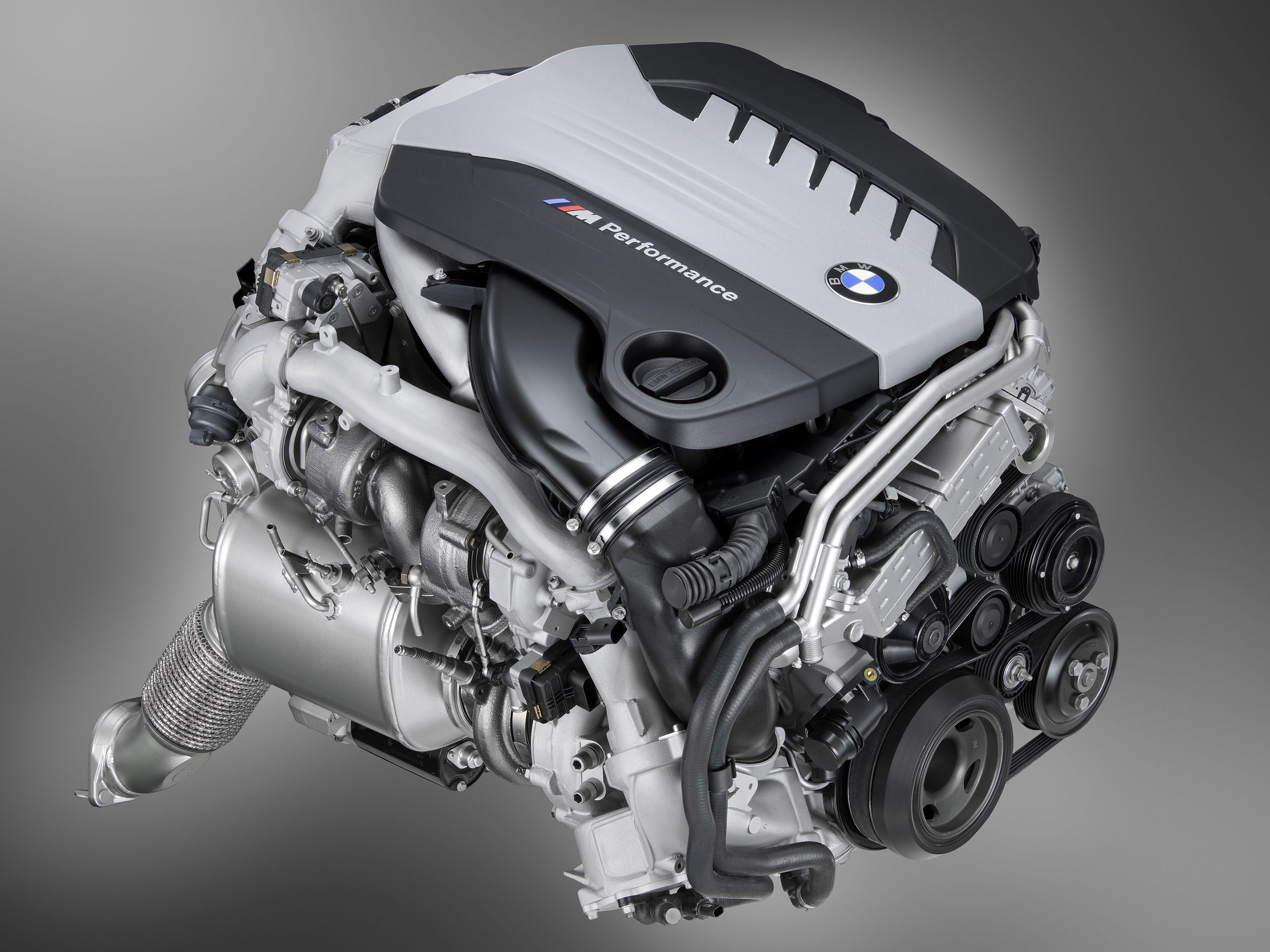
Originally derived from the N57 3.0-liter inline-six diesel, it featured a new aluminum crankcase, piezo common-rail injection at pressures of up to 2,200 bar, and an added third turbocharger. It generated 280 kW (381 PS or 375 hp) and 740 Nm (546 lb-ft) of torque between 2,000 and 3,000 rpm, achieving 93.6 kW per liter—a record for diesel engines at the time. It was the most powerful six-cylinder diesel on the market upon its unveiling.
In comparison, the 4.4-liter twin-turbo V8 in the F10 550i produced 600 Nm, indicating that the diesel six significantly outperformed BMW's own V8 regarding torque from 2,000 rpm.
Functionality of the Tri-Turbochargers
BorgWarner supplied the turbocharger components: two smaller BV45 high-pressure turbos with variable turbine geometry and one larger, water-cooled B2 low-pressure turbo. They functioned in a staggered fashion; the first small turbo worked in tandem with the larger one just above idle, allowing for rapid response, while the larger turbo increased charge pressure. At around 2,700 rpm, the second small turbo would activate. Maximum boost reached 3.5 bar.
This configuration aimed
Article Synopsis
- In 2012, BMW’s N57S unit employed three turbochargers to achieve 740 Nm (546 lb-ft) from a 3.0-liter inline-six, exceeding the torque of the V8 F10 M5.
- This engine powered vehicles such as the M550d, 750d, and X5 and X6 M50d, while the US market was limited to the less potent 265-hp X5 xDrive35d.
- With plug-in hybrids gaining traction in the EU, the latest X5’s only diesel option generates 70 Nm less than the 2012 engine.
In 2012, BMW launched a 5 Series that featured greater torque than the M5, yet it was not equipped with a V8 and was not offered in the US. The M550d xDrive came with a 3.0-liter inline-six diesel featuring three turbochargers, delivering 740 Nm (546 lb-ft) of torque, whereas the F10 M5’s twin-turbo V8 yielded 500 lb-ft. American buyers could only get the X5 xDrive35d, which was powered by a 3.0-liter twin-turbo six generating 265 hp and 425 lb-ft. In Europe, the same engine size was upgraded with an additional turbo, resulting in approximately 120 lb-ft more torque in the M550d, 750d, and X5 and X6 M50d, which were mostly unavailable in the US.
We highlight this now as diesel engines are experiencing a decrease in their traditional stronghold. In the first half of 2026, plug-in hybrids outperformed diesels in the EU, achieving a market share of 9.8 percent versus 7.5 percent for diesels. The new G65 X5 presents only one diesel variant, the mild-hybrid 40d xDrive, producing 670 Nm (494 lb-ft), which is 70 Nm less than the tri-turbo from fourteen years prior. Our encounters with the N57S in three different BMW models lead us to believe that such an engine is improbable to be reproduced.
N57S Overview
The N57S was launched in early 2012 as the first engine for BMW M Performance Automobiles, a series that sits between standard models and full M vehicles. BMW M GmbH upgraded the chassis, xDrive, and steering of these cars, with the engine delivering the sub-brand’s exceptional performance metrics.
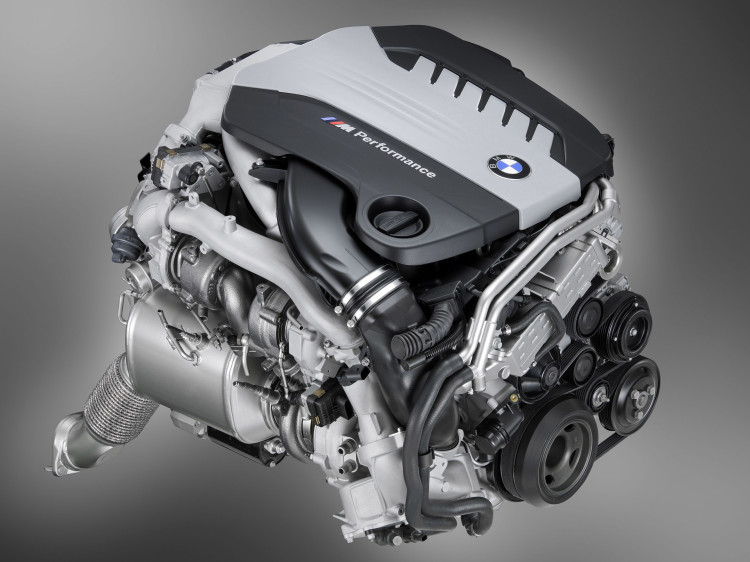
Originally derived from the N57 3.0-liter inline-six diesel, it featured a new aluminum crankcase, piezo common-rail injection at pressures of up to 2,200 bar, and an added third turbocharger. It generated 280 kW (381 PS or 375 hp) and 740 Nm (546 lb-ft) of torque between 2,000 and 3,000 rpm, achieving 93.6 kW per liter—a record for diesel engines at the time. It was the most powerful six-cylinder diesel on the market upon its unveiling.
In comparison, the 4.4-liter twin-turbo V8 in the F10 550i produced 600 Nm, indicating that the diesel six significantly outperformed BMW’s own V8 regarding torque from 2,000 rpm.
Functionality of the Tri-Turbochargers
BorgWarner supplied the turbocharger components: two smaller BV45 high-pressure turbos with variable turbine geometry and one larger, water-cooled B2 low-pressure turbo. They functioned in a staggered fashion; the first small turbo worked in tandem with the larger one just above idle, allowing for rapid response, while the larger turbo increased charge pressure. At around 2,700 rpm, the second small turbo would activate. Maximum boost reached 3.5 bar.
This configuration aimed