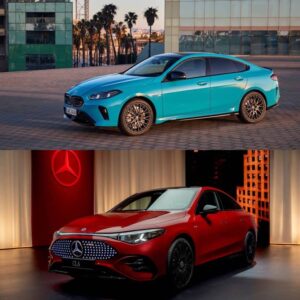
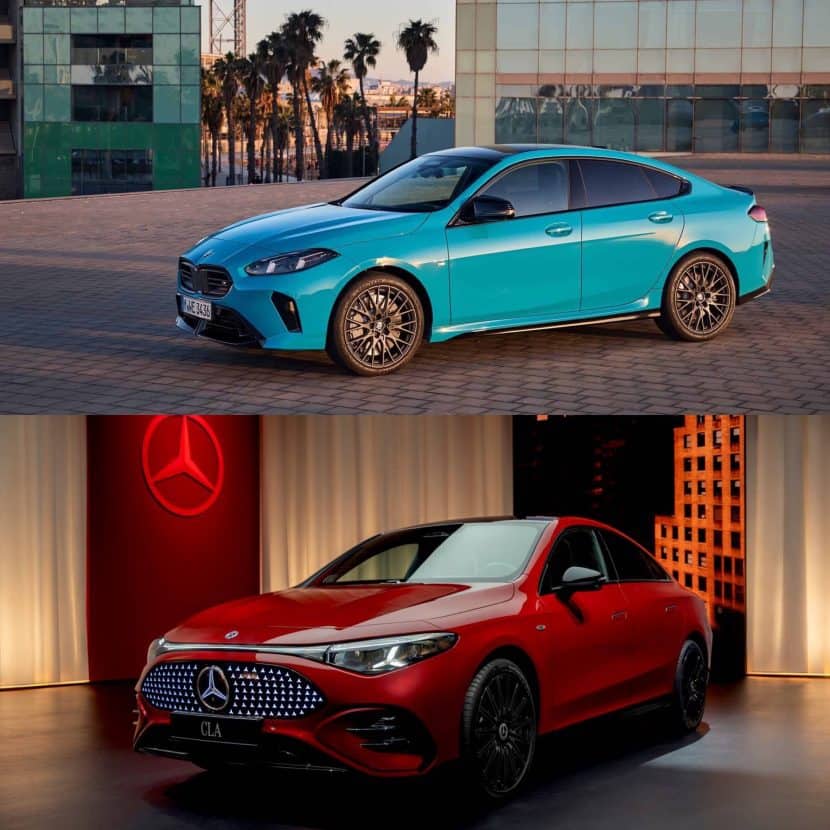
BMW is comfortably outselling Mercedes-Benz in Europe, and the gap is getting harder to ignore. New registration figures published by the European Automobile Manufacturers’ Association (ACEA) show that BMW registered 672,258 cars across the European Union, EFTA countries, and the United Kingdom between January and October 2026. That’s 96,132 more vehicles than Mercedes-Benz, which recorded 576,126 registrations during the same period.
In other words, BMW sold nearly 100,000 more cars than its longtime Stuttgart rival in Europe’s broader market. The Munich-based automaker also increased its registrations by 1.6% compared to the first ten months of 2025, while Mercedes-Benz posted a stronger 3.5% increase. Despite growing more slowly, BMW has maintained a substantial lead.
The difference becomes even more apparent in market share. BMW captured 5.8% of the EU+EFTA+UK market, compared to Mercedes-Benz’s 4.9%. That’s a 0.9-percentage-point advantage for the Bavarian brand. Looking exclusively at the EU, BMW registered 548,928 cars through October, compared to 474,327 Mercedes-Benz vehicles. That’s a smaller but still significant advantage of 74,601 units. The wider European figures include the three EFTA countries (Iceland, Norway, and Switzerland), as well as the United Kingdom. Adding those markets pushes BMW’s lead to more than 96,000 vehicles.
BMW Is Growing, But The Competition Isn’t Standing Still
The broader European car market is also moving in the right direction. ACEA reports that registrations across the EU, EFTA, and UK reached 11,682,800 units between January and October 2026, representing a 6% increase over the same period last year. BMW’s 1.6% growth is therefore considerably more modest than the market’s overall expansion. Mercedes-Benz did slightly better at 3.5%, but neither brand kept pace with the broader industry.
Elsewhere, Volkswagen remains the dominant force, with 1,167,495 registrations across the same markets. That’s considerably more than either premium German rival, although the comparison isn’t entirely fair given VW’s broader lineup and mainstream positioning.
Speaking of the VW Group, Audi is third in Europe’s premium-car race, but it’s a close contest for the runner-up spot. The Four Rings registered 550,803 cars across the EU, EFTA, and UK through October 2026, trailing Mercedes-Benz by just 25,323 units. Audi grew 1.6% year over year, matching BMW’s growth rate, but that wasn’t enough to catch its Stuttgart rival.
What About MINI?
MINI is arguably BMW Group’s biggest success story in Europe this year. The British brand registered 158,442 cars across the EU, EFTA, and UK between January and October 2026, a healthy 14.3% increase over the same period last year. That’s considerably stronger growth than BMW’s own 1.6% increase, suggesting the smaller marque is enjoying renewed momentum. MINI also improved its market share from 1.3% to 1.4%.
The positive trend isn’t limited to the wider European market. MINI recorded 107,082 registrations in the EU alone, up 11.8% year over year. October was particularly encouraging, with registrations jumping 12.6% across Europe to 17,627 units. With the Cooper, Countryman, and Aceman covering different segments and offering both combustion and electric powertrains, MINI appears to be finding plenty of customers. BMW might be winning the sales battle against Mercedes, but its British subsidiary deserves some of the spotlight, too.
Source: European Automobile Manufacturers’ Association (ACEA)
First published by https://www.bmwblog.com