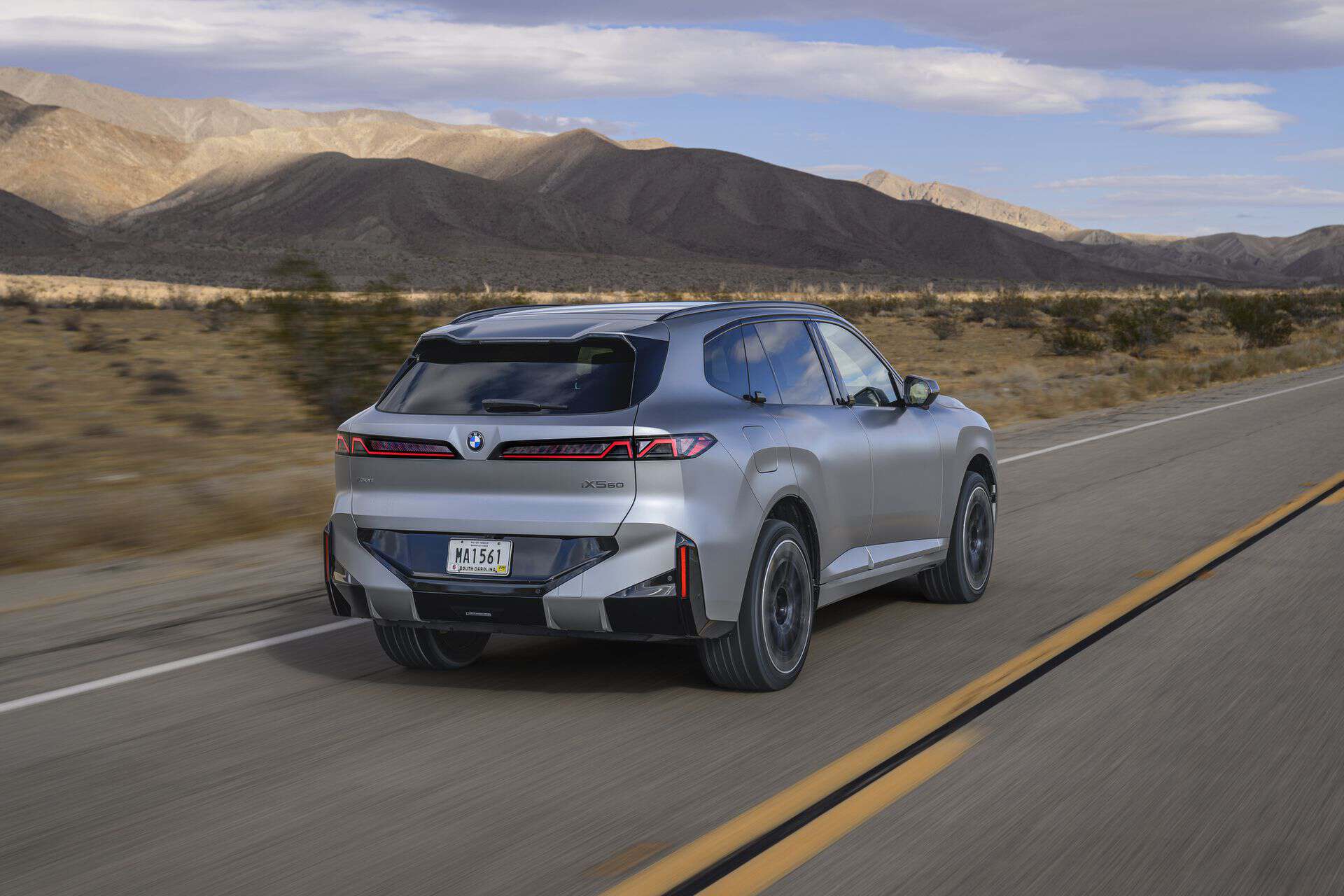
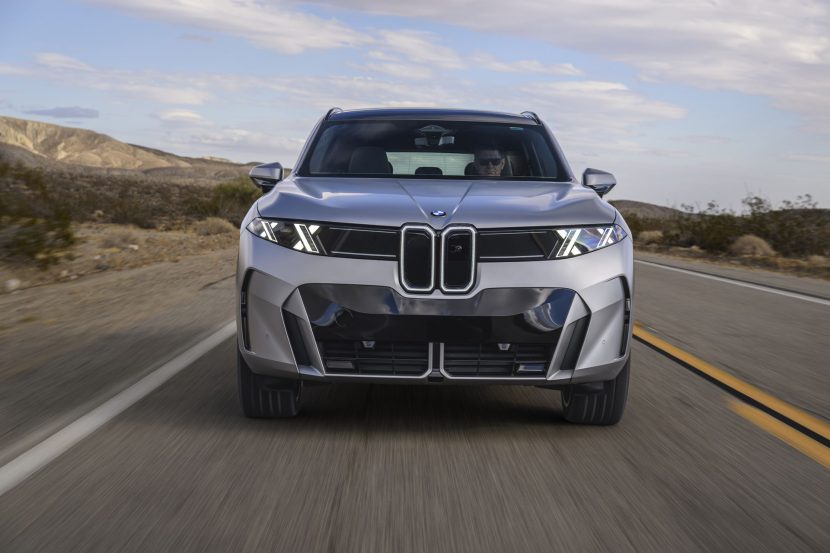
Running out of battery juice in an electric vehicle isn’t something anyone wants to experience, but what happens when the battery indicator reaches 0%? As it turns out, BMW has built a surprisingly generous safety net into its latest electric SUV. A new range-to-zero test conducted by Out of Spec Testing reveals that the iX5 can travel another 21.8 miles (35 kilometers) after its battery display hits 0%.
That’s a remarkable result, especially considering how much energy the vehicle still has available after the instrument panel effectively tells the driver there’s nothing left. The test involved a pre-series example with nearly 5,000 miles (nearly 8,050 kilometers) on the odometer, and it wasn’t exactly eager to give up.
The experiment started with the battery at around 4% state of charge. The SUV initially displayed an electric-range warning advising the driver to charge at the next opportunity. Selecting Max Range mode further restricted the vehicle by limiting its maximum speed, reducing drive power, and cutting back on comfort functions.
It Lost About 100 Horsepower Once The Battery Dropped From 4% To 2%
At 2%, the iX5 still produced about 350 horsepower. That’s down from roughly 450 hp at 4%, but hardly what you’d call a crippling power reduction. Even at 1%, the SUV continued to deliver substantial performance, although the driver noticed the power meter indicating that some limitations were kicking in. Interestingly, the battery indicator remained at 1% for quite a while before finally dropping to zero. Once that happened, the official test began, with the driver maintaining speeds between 35 and 55 mph (56 and 89 km/h) on a closed course.
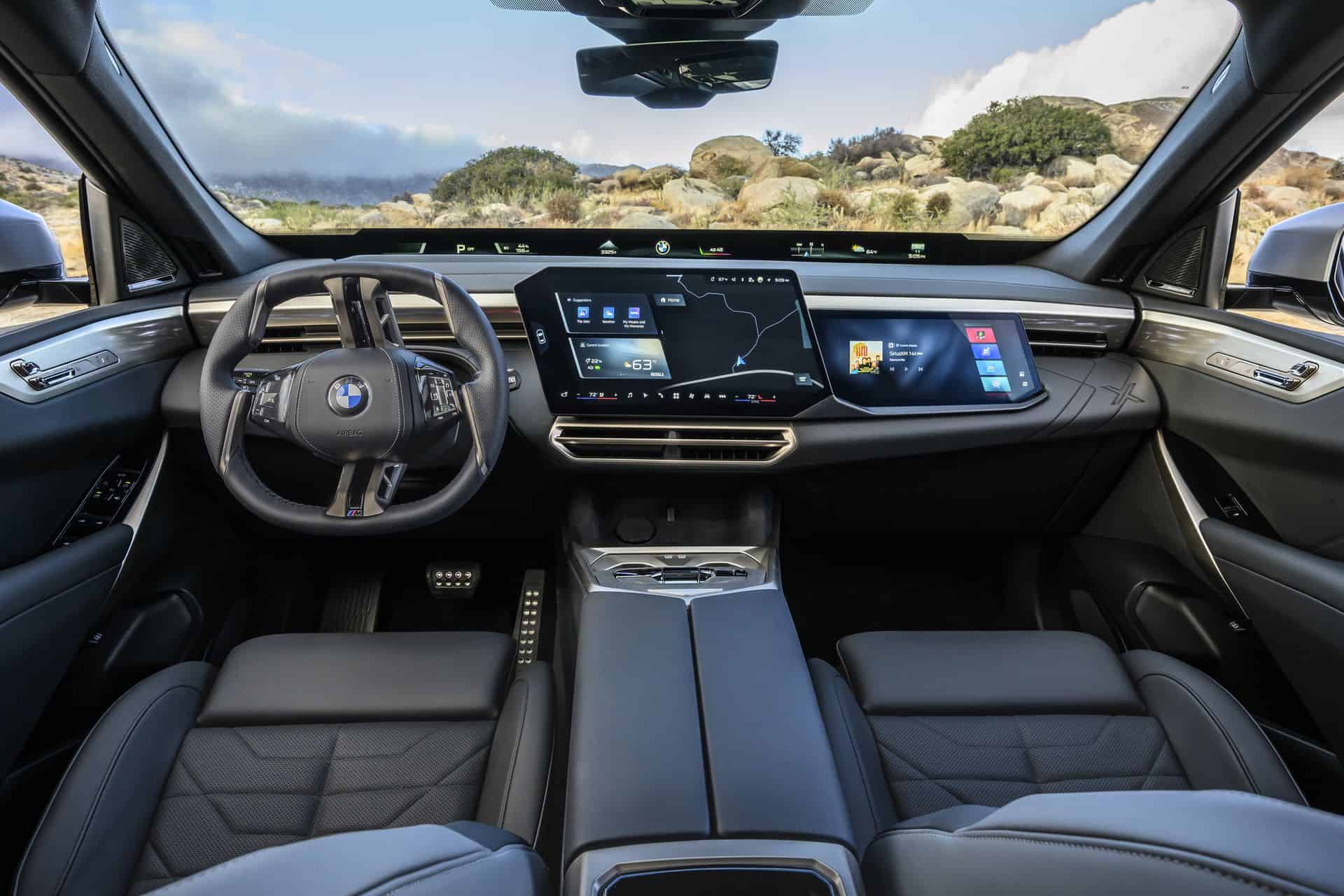
The first surprise was how little drama accompanied the transition to 0%. The instrument panel displayed a yellow power meter and a turtle icon, along with a warning advising the driver to avoid heavy acceleration and overtaking. However, the BMW continued to behave remarkably normally. Rather than slowing down immediately, the electric SUV kept going. After covering approximately 8.4 miles (13.5 km) beyond zero, it had already consumed almost 3 kWh from its hidden battery reserve.
At around 10 miles (16 km), the accelerator pedal started feeling slightly softer, but the vehicle remained perfectly capable of cruising. Eventually, at 10.7 miles (17.2 km) past zero, the first significant loss of power occurred. The iX5 stopped responding to accelerator inputs and began slowing down.
A Restart Unlocks Even More Hidden Range
However, that wasn’t quite the end of the story. The driver managed to keep the SUV rolling at very low speeds before it eventually came to a complete stop after roughly 11 miles (17.7 km) below zero. By then, the battery had supplied approximately 3.5 kWh beyond the displayed usable capacity.
After the initial shutdown, the Out of Spec team turned the vehicle off and back on again. Remarkably, the iX5 came back to life and could drive normally again. That restart effectively gave it a second wind, allowing the SUV to cover additional miles. It even managed to cruise at 55 mph (89 km/h), despite having supposedly exhausted its battery.
The team continued driving as power limitations became increasingly noticeable. At one point, the vehicle had traveled more than 20 miles (32 km) beyond zero and consumed approximately 7 kWh from its reserve. Eventually, the iX5 shut itself down completely, automatically engaging Park. A subsequent restart attempt was unsuccessful, confirming that the battery really was depleted.
The final numbers were impressive: 21.8 miles (35 km) traveled after the display reached 0%, with 7.4 kWh of additional energy consumed. That’s a substantial buffer, particularly for an electric SUV of this size. The tester also calculated an efficiency of approximately 3 miles per kWh (19.3 kWh/100 km) during the experiment.
A Generous Safety Net, But Don’t Rely On It
Out of Spec Testing acknowledged that there’s no universally correct amount of hidden battery capacity. Having a vehicle stop immediately at 0% would mean drivers could use virtually all the displayed range. On the other hand, keeping some energy in reserve can make the difference between reaching a charging station and calling for roadside assistance. BMW appears to have opted for the latter approach with the iX5. Its roughly 7.4-kWh reserve is particularly generous, giving drivers a considerable safety net if they miscalculate their remaining range.
There are some important caveats, though. This was a single test conducted under specific conditions, with a relatively warm battery and a pre-series vehicle. Battery temperature, age, driving conditions, and repeated charging and discharging cycles can all influence how much energy remains available below the displayed zero. In other words, don’t treat those extra 21.8 miles as guaranteed range. Still, it’s reassuring to know that BMW’s electric SUV has quite a bit left in reserve when the battery gauge runs out of numbers.
Video: Out of Spec Testing / YouTube
First published by https://www.bmwblog.com