
September 29, 2026
Lahore Introduces E-Challans to Enhance Anti-Littering Efforts
**Lahore Adopts E-Challans to Enhance Anti-Littering Efforts**Lahore, Pakistan’s cultural hub, is making a pivotal advancement in its campaign against littering and preserving cleanliness throughout the city. To bolster its anti-littering strategies, the city has rolled out an innovative electronic challan (e-challan) system. This initiative is part of a comprehensive plan to harness technology for superior urban management and ecological sustainability.**The Necessity for E-Challans**Littering has persistently posed a challenge for Lahore, a lively metropolis with a population surpassing 11 million. The buildup of waste not only diminishes the city’s visual appeal but also presents health and environmental hazards. Conventional methods of enforcing anti-littering regulations have proven insufficient, often impeded by limited personnel and inefficiencies in manual fine collection mechanisms.To tackle these issues, the Lahore Waste Management Company (LWMC) and the city’s municipal authorities have joined forces to introduce an e-challan system. This system is designed to streamline the processes of identifying, penalizing, and deterring littering infractions through technological means.**Operational Mechanics of the E-Challan System**The e-challan system employs a network of surveillance cameras strategically installed throughout the city to oversee public areas. These cameras are fitted with sophisticated image recognition software capable of detecting littering behaviors. When someone is observed littering, the system captures the event and records the offender's vehicle registration number or personal identification details.The information is subsequently processed, an electronic challan is produced, and it is dispatched to the offender via SMS or email. The e-challan contains specifics of the violation, the imposed fine, and payment guidelines. Offenders are allotted a designated timeframe to pay the fine; failure to do so may lead to further legal action.**Advantages of the E-Challan System**1. **Speed and Precision**: The automated aspect of the e-challan system minimizes human error and accelerates the processing of violations. It guarantees that fines are administered correctly and swiftly.2. **Preventive Measures**: The visibility of surveillance cameras and the assurance of penalties act as a strong deterrent against littering. Citizens are more inclined to adhere to anti-littering laws when they realize they are under observation.3. **Revenue Generation**: The fines accrued through e-challans add to the city’s revenue, which can be reinvested into additional cleanliness and environmental programs.4. **Raising Awareness**: The system also serves an educational purpose by increasing awareness of the significance of cleanliness and the repercussions of littering.**Challenges and Considerations**Although the e-challan system presents various benefits, it also introduces specific challenges. Concerns regarding privacy have emerged about the deployment of surveillance cameras, necessitating stringent data protection protocols. Furthermore, the system demands a sturdy technological framework and ongoing maintenance for optimal functionality.To guarantee the e-challan initiative's success, city authorities are emphasizing public education campaigns. These efforts aim to cultivate a sense of responsibility and civic pride among Lahoris, motivating them to take an active role in maintaining the cleanliness of their city.**Conclusion**Lahore's adoption of the e-challan system signifies a progressive strategy towards urban management and environmental preservation. By utilizing technology, the city is not only enhancing its measures against littering but also establishing a benchmark for other cities in Pakistan and beyond. As Lahore continues to progress, initiatives like these will be pivotal in fostering a cleaner, healthier, and more sustainable urban landscape.


**Lahore Adopts E-Challans to Enhance Anti-Littering Efforts**

Lahore, Pakistan’s cultural hub, is making a pivotal advancement in its campaign against littering and preserving cleanliness throughout the city. To bolster its anti-littering strategies, the city has rolled out an innovative electronic challan (e-challan) system. This initiative is part of a comprehensive plan to harness technology for superior urban management and ecological sustainability.

**The Necessity for E-Challans**

Littering has persistently posed a challenge for Lahore, a lively metropolis with a population surpassing 11 million. The buildup of waste not only diminishes the city’s visual appeal but also presents health and environmental hazards. Conventional methods of enforcing anti-littering regulations have proven insufficient, often impeded by limited personnel and inefficiencies in manual fine collection mechanisms.

To tackle these issues, the Lahore Waste Management Company (LWMC) and the city’s municipal authorities have joined forces to introduce an e-challan system. This system is designed to streamline the processes of identifying, penalizing, and deterring littering infractions through technological means.

**Operational Mechanics of the E-Challan System**

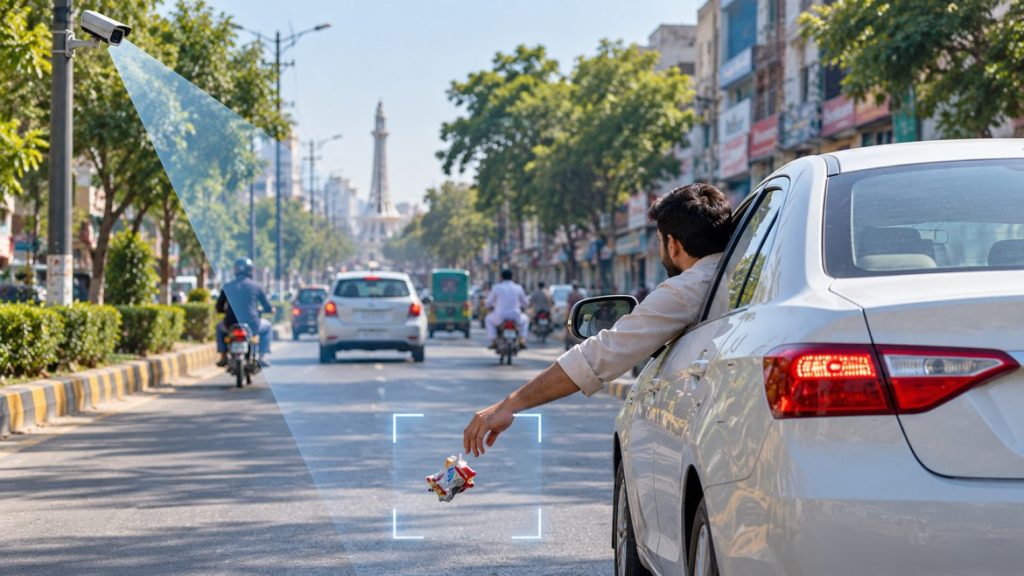
The e-challan system employs a network of surveillance cameras strategically installed throughout the city to oversee public areas. These cameras are fitted with sophisticated image recognition software capable of detecting littering behaviors. When someone is observed littering, the system captures the event and records the offender’s vehicle registration number or personal identification details.

The information is subsequently processed, an electronic challan is produced, and it is dispatched to the offender via SMS or email. The e-challan contains specifics of the violation, the imposed fine, and payment guidelines. Offenders are allotted a designated timeframe to pay the fine; failure to do so may lead to further legal action.

**Advantages of the E-Challan System**

1. **Speed and Precision**: The automated aspect of the e-challan system minimizes human error and accelerates the processing of violations. It guarantees that fines are administered correctly and swiftly.

2. **Preventive Measures**: The visibility of surveillance cameras and the assurance of penalties act as a strong deterrent against littering. Citizens are more inclined to adhere to anti-littering laws when they realize they are under observation.

3. **Revenue Generation**: The fines accrued through e-challans add to the city’s revenue, which can be reinvested into additional cleanliness and environmental programs.

4. **Raising Awareness**: The system also serves an educational purpose by increasing awareness of the significance of cleanliness and the repercussions of littering.

**Challenges and Considerations**

Although the e-challan system presents various benefits, it also introduces specific challenges. Concerns regarding privacy have emerged about the deployment of surveillance cameras, necessitating stringent data protection protocols. Furthermore, the system demands a sturdy technological framework and ongoing maintenance for optimal functionality.

To guarantee the e-challan initiative’s success, city authorities are emphasizing public education campaigns. These efforts aim to cultivate a sense of responsibility and civic pride among Lahoris, motivating them to take an active role in maintaining the cleanliness of their city.

**Conclusion**

Lahore’s adoption of the e-challan system signifies a progressive strategy towards urban management and environmental preservation. By utilizing technology, the city is not only enhancing its measures against littering but also establishing a benchmark for other cities in Pakistan and beyond. As Lahore continues to progress, initiatives like these will be pivotal in fostering a cleaner, healthier, and more sustainable urban landscape.