September 22, 2026
Saudi Arabia Unveils Its Initial Range of Homegrown Electric Vehicles; Possible Consequences for Pakistan
**Saudi Arabia Unveils First Locally Manufactured Electric Vehicles; Potential Ramifications for Pakistan**In a crucial step towards eco-friendly transportation, Saudi Arabia has unveiled its inaugural domestically manufactured electric vehicles (EVs), signifying an important milestone in the Kingdom's Vision 2030 framework. This advancement not only highlights Saudi Arabia's dedication to diversifying its economy and minimizing its dependence on oil but also holds potential ramifications for neighboring nations, including Pakistan.**Saudi Arabia's Electric Vehicle Endeavor**Saudi Arabia's venture into the electric vehicle sector is led by its national automotive brand, Ceer, established through a collaboration with leading global automotive companies. The initiative seeks to establish the Kingdom as a frontrunner in the automotive field, emphasizing innovation and sustainability. The introduction of domestic EVs is anticipated to boost local manufacturing, generate employment, and draw foreign investment, in line with the overarching economic diversification objectives set forth in Vision 2030.**Potential Ramifications for Pakistan**1. **Economic Prospects:** - **Trade and Investment:** Saudi Arabia's entry into the EV market may create fresh opportunities for trade and investment between the nations. Pakistan could gain from technology transfer, collaborative ventures, and heightened trade in automotive components and parts. - **Employment Generation:** As Saudi Arabia enhances its EV manufacturing capabilities, prospects may arise for Pakistani professionals and skilled workers in the automotive industry, encouraging job creation and skill enhancement.2. **Environmental Considerations:** - **Sustainability Objectives:** Pakistan, similar to many nations, faces environmental issues. The incorporation of EV technology from Saudi Arabia could bolster Pakistan's initiatives to lower carbon emissions and shift towards cleaner energy alternatives. - **Infrastructure Improvement:** The rollout of EVs requires the establishment of charging infrastructure. Pakistan could partner with Saudi Arabia to develop the needed resources, fostering sustainable urban growth.3. **Technological Progress:** - **Innovation and Development:** Collaborating on research and development could elevate the technological prowess in both nations. Pakistan could tap into Saudi expertise in EV technology to enhance its own automotive sector. - **Training and Education:** Cooperative educational and training initiatives could prepare Pakistani engineers and technicians with the essential skills to support the EV market.4. **Geopolitical Influences:** - **Bolstering Bilateral Ties:** The EV initiative might further cement the strategic alliance between Saudi Arabia and Pakistan, promoting cooperation across various sectors beyond energy and defense. - **Regional Influence:** As Saudi Arabia aims to emerge as a leader in the EV domain, Pakistan could align with the Kingdom to foster regional stability and economic development.**Challenges and Factors to Consider**Despite the considerable prospective benefits, there are obstacles to address. Pakistan's current infrastructure may necessitate significant upgrades to facilitate EV adoption. Furthermore, the affordability of EVs and the availability of budget-friendly models will play critical roles in shaping the market's expansion in Pakistan.**Conclusion**Saudi Arabia's debut of domestic electric vehicles signifies a transformative leap towards a sustainable future. For Pakistan, this event presents multiple opportunities for economic synergy, technological progress, and environmental sustainability. By cultivating strong bilateral relationships and tackling infrastructure challenges, Pakistan can position itself to thrive amidst the changing landscape of the global automotive sector.


**Saudi Arabia Unveils First Locally Manufactured Electric Vehicles; Potential Ramifications for Pakistan**

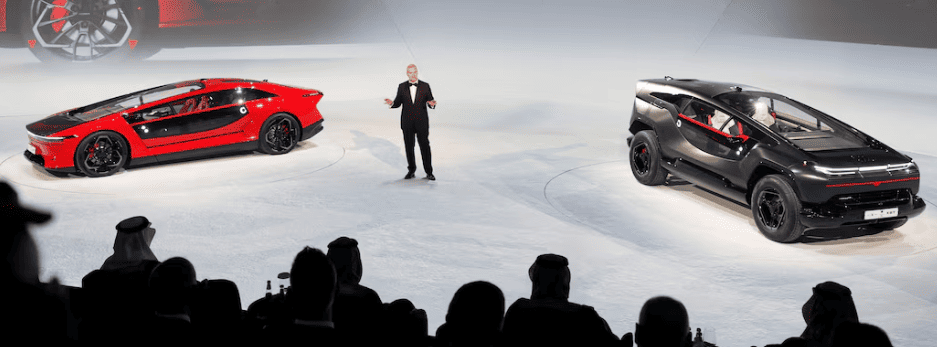
In a crucial step towards eco-friendly transportation, Saudi Arabia has unveiled its inaugural domestically manufactured electric vehicles (EVs), signifying an important milestone in the Kingdom’s Vision 2030 framework. This advancement not only highlights Saudi Arabia’s dedication to diversifying its economy and minimizing its dependence on oil but also holds potential ramifications for neighboring nations, including Pakistan.

**Saudi Arabia’s Electric Vehicle Endeavor**

Saudi Arabia’s venture into the electric vehicle sector is led by its national automotive brand, Ceer, established through a collaboration with leading global automotive companies. The initiative seeks to establish the Kingdom as a frontrunner in the automotive field, emphasizing innovation and sustainability. The introduction of domestic EVs is anticipated to boost local manufacturing, generate employment, and draw foreign investment, in line with the overarching economic diversification objectives set forth in Vision 2030.

**Potential Ramifications for Pakistan**

1. **Economic Prospects:**
– **Trade and Investment:** Saudi Arabia’s entry into the EV market may create fresh opportunities for trade and investment between the nations. Pakistan could gain from technology transfer, collaborative ventures, and heightened trade in automotive components and parts.
– **Employment Generation:** As Saudi Arabia enhances its EV manufacturing capabilities, prospects may arise for Pakistani professionals and skilled workers in the automotive industry, encouraging job creation and skill enhancement.

2. **Environmental Considerations:**
– **Sustainability Objectives:** Pakistan, similar to many nations, faces environmental issues. The incorporation of EV technology from Saudi Arabia could bolster Pakistan’s initiatives to lower carbon emissions and shift towards cleaner energy alternatives.
– **Infrastructure Improvement:** The rollout of EVs requires the establishment of charging infrastructure. Pakistan could partner with Saudi Arabia to develop the needed resources, fostering sustainable urban growth.

3. **Technological Progress:**
– **Innovation and Development:** Collaborating on research and development could elevate the technological prowess in both nations. Pakistan could tap into Saudi expertise in EV technology to enhance its own automotive sector.
– **Training and Education:** Cooperative educational and training initiatives could prepare Pakistani engineers and technicians with the essential skills to support the EV market.

4. **Geopolitical Influences:**
– **Bolstering Bilateral Ties:** The EV initiative might further cement the strategic alliance between Saudi Arabia and Pakistan, promoting cooperation across various sectors beyond energy and defense.
– **Regional Influence:** As Saudi Arabia aims to emerge as a leader in the EV domain, Pakistan could align with the Kingdom to foster regional stability and economic development.

**Challenges and Factors to Consider**

Despite the considerable prospective benefits, there are obstacles to address. Pakistan’s current infrastructure may necessitate significant upgrades to facilitate EV adoption. Furthermore, the affordability of EVs and the availability of budget-friendly models will play critical roles in shaping the market’s expansion in Pakistan.

**Conclusion**

Saudi Arabia’s debut of domestic electric vehicles signifies a transformative leap towards a sustainable future. For Pakistan, this event presents multiple opportunities for economic synergy, technological progress, and environmental sustainability. By cultivating strong bilateral relationships and tackling infrastructure challenges, Pakistan can position itself to thrive amidst the changing landscape of the global automotive sector.