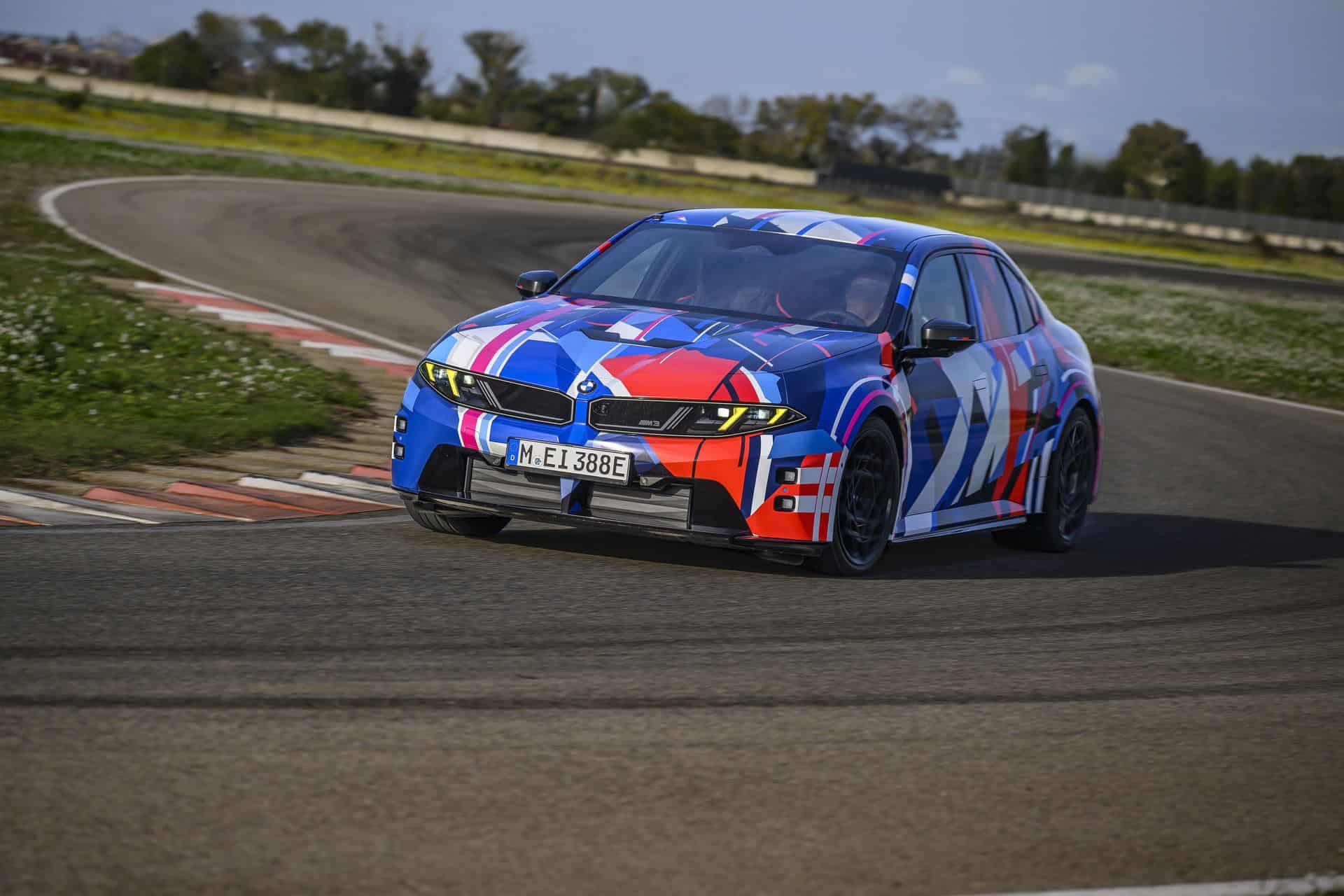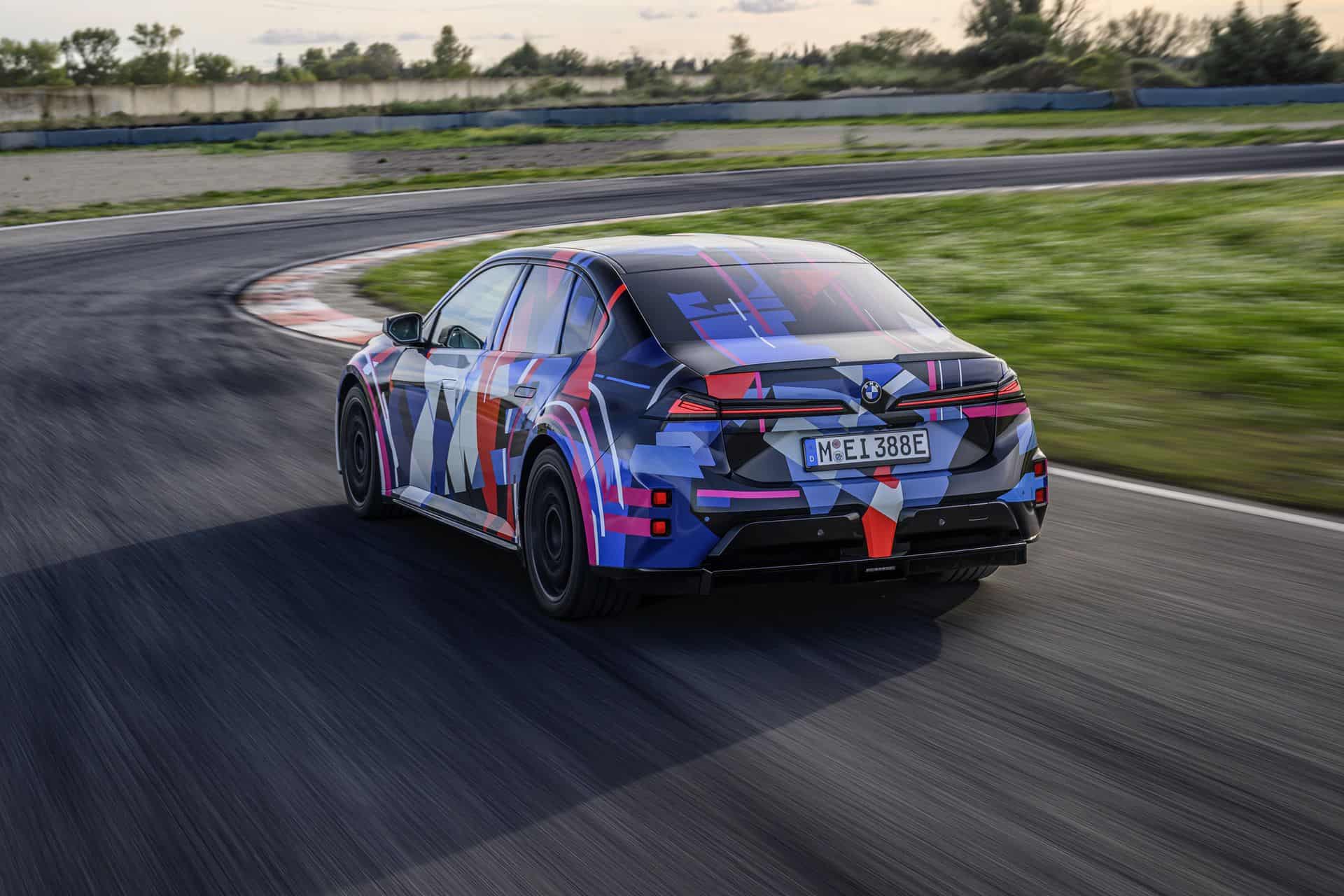
The electric BMW M3 can recover up to 540 kW under braking, according to BMW’s preliminary figures. That’s 140 kW more than Porsche quotes for the Taycan Turbo GT, and more than any figure we could find for the Hyundai Ioniq 5 N, Lucid Air Sapphire or Tesla Model S Plaid. It isn’t the highest regen rating in a production car, though. Porsche rates its new Cayenne Electric SUV at up to 600 kW, the same as its Formula E car. Comparing regen across brands is harder than it should be. BMW and Porsche quote kilowatts, Hyundai quotes g-forces, and Tesla and Lucid don’t publish a number at all.
How Much Regen Does Each Electric Performance Car Have?
| Car | Maximum regen | Source |
|---|---|---|
| BMW M3 (electric) | 540 kW | BMW, preliminary |
| Porsche Taycan Turbo GT | Up to 400 kW | Porsche |
| Hyundai Ioniq 5 N | Up to 0.6 g (0.2 g during ABS), no kW figure | Hyundai |
| Lucid Air Sapphire | Not published, up to 250 kW reported | Reviews |
| Tesla Model S Plaid | Not published, about 90 kW listed | EVKX database |
Porsche raised the Taycan’s maximum from 290 kW to 400 kW with the 2025 update, and the Turbo GT shares that figure. The Plaid and Sapphire numbers come from an independent EV database and a review, not from Tesla or Lucid, so treat them as rough.
Why Kilowatts And G-Forces Aren’t The Same Thing
A kilowatt figure is a power limit, and power is braking force multiplied by speed. So the same 540 kW brakes a car twice as hard at 100 km/h as it does at 200 km/h. At low speeds, the motors’ torque and the tires’ grip run out first. The kilowatt rating decides how much of the braking the motors can still handle at high speed before the friction brakes join in.
Take a stop from 200 km/h (124 mph). With its 400 kW and a 2,290-kg (5,049-lb) DIN curb weight, the Taycan Turbo GT can slow at about 0.32 g on regen alone. BMW hasn’t released the M3’s weight, but if it lands near the rumored 2,500 kg (5,512 lb), its 540 kW would give it about 0.40 g from the same speed. That’s harder regen braking than the Porsche’s, even with roughly 210 kg (463 lb) more to slow down.
Hyundai’s 0.6 g works the other way around. On an Ioniq 5 N that Hyundai puts at about 2.2 tons, 0.6 g at 100 km/h (62 mph) takes roughly 360 kW, by our math. Holding 0.6 g at higher speeds would take far more power than that, so Hyundai’s figure most likely applies lower down the speed range. Hyundai doesn’t say what its kilowatt limit is.
How The Electric M3 Uses Its 540 kW
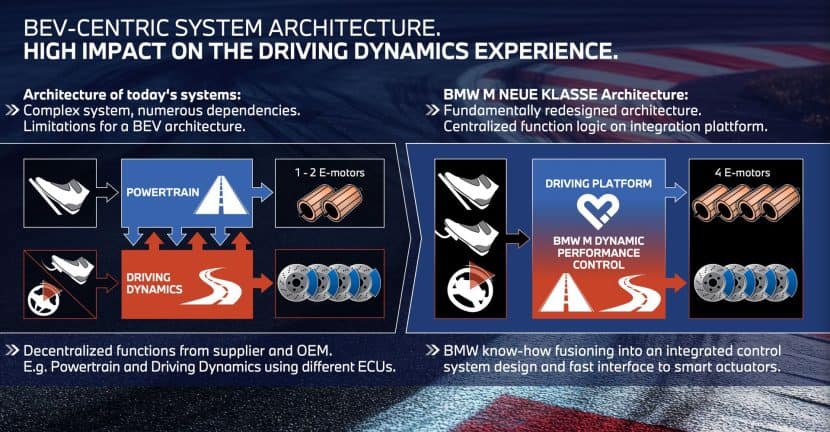
BMW told BMWBLOG that regen always gets priority. The motors do the braking up to 540 kW, combined across all four wheels, and the friction brakes only add force when you ask for more. That 540 kW is available through the brake pedal, not just when you lift off. Lifting off the accelerator alone gives up to about 0.4 g in the strongest setting, and the split between regen and friction braking depends on speed and the battery’s state of charge.
With four motors, the M3 can regenerate at each wheel separately, so in a corner the outside front does most of the braking. The motors also run the ABS, at one-millisecond intervals, which means regen doesn’t cut out when the tires reach the limit. “We never quit the regen,” said Carsten Wolf, who is responsible for the functional integration of the whole project. “That’s different to any other EV I know.” Driving it at Miramas, I couldn’t tell when the car switched between regen, friction braking and ABS.
How Porsche, Hyundai, Lucid And Tesla Do It Differently
Porsche’s approach is the closest to BMW’s. Lift off in a Taycan and it mostly coasts, because Porsche recovers energy mainly through the brake pedal and blends in the friction brakes only when the motors run out. Porsche says about 90 percent of everyday braking in a Taycan is done electrically, and that a full stop from top speed in a fully loaded car needs more than 2 megawatts, far more than the motors can absorb. The Cayenne Electric follows the same approach with its 600 kW, and Porsche says its regen stays active during hard driving.
Hyundai developed the Ioniq 5 N’s N Brake Regen for the Nürburgring and makes regen the main source of braking force, with the friction brakes adding to it as needed. According to Hyundai, regen does 80 to 90 percent of the braking in daily driving and 40 to 50 percent on the Nordschleife. Regen also stays on during ABS stops, but at no more than 0.2 g, whereas the M3’s motors run the ABS themselves. Hyundai’s N Pedal mode uses heavy lift-off regen for another job: shifting weight onto the front tires to help the car turn in.
Lucid’s spec sheet says the Air Sapphire’s regen is accelerator pedal-actuated, and its brake booster is hydraulically linked rather than brake-by-wire. That suggests the brake pedal mainly works the standard carbon-ceramic brakes, which measure 420 mm with 10-piston calipers up front. Lucid has quoted up to 0.3 g of regen for its all-wheel-drive Airs. The Sapphire also uses regen to help it turn: in tight corners, it brakes the inside rear wheel with its motor while driving the outside one.
Tesla also lists the Model S’s regen as accelerator pedal-actuated, so the Plaid recovers energy when you lift off and stops with its friction brakes when you press the pedal. In Track Mode, drivers can set regen anywhere from 0 to 100 percent in 5 percent steps. Tesla’s manual recommends 100 percent on the standard brakes to keep them from overheating.
Mercedes-AMG hasn’t published a regen figure for its new electric GT 4-Door Coupé either. Drivers adjust its regen with the steering-wheel paddles.
What 540 kW Means On A Racetrack
At Miramas, the M3’s discs read around 70 degrees Celsius (158 degrees Fahrenheit) after a session on the Circuit de Provence. Wolf said a combustion M3 driven the same way comes back at around 300 degrees Celsius (572 degrees Fahrenheit).
BMW puts the energy recovered on track at roughly 30 percent of what the car uses. Its rule of thumb at Miramas was that three laps earn you a fourth. On a mountain road driven hard, BMW says it can be up to half. Because regen does so much of the braking, BMW sized the friction brakes “as big as required, but as small as possible,” and told BMWBLOG the M3’s brake system weighs slightly less than the current combustion M3’s.
The 540 kW is a peak. BMW’s engineers said full regen depends on the battery being at its optimal temperature, which is one reason the Track preset preconditions it before a session. BMW hasn’t said how long the M3 can hold 540 kW, or how much less it takes with a cold or nearly full battery. Porsche attaches the same conditions to the Cayenne’s 600 kW: speed, temperature and state of charge. That’s the first thing we’ll check when we get an M3 for longer.
First published by https://www.bmwblog.com