Article Overview
- The G65 X5 spans 196.8 inches in length with a 119.5-inch wheelbase, narrowing the gap with the X7 while removing the option for third-row seating.
- There are five powertrain choices available for the X5, including a plug-in hybrid and a full electric variant, in contrast to the current X7, which only offers gasoline engines and lacks a plug-in alternative.
- The starting price for the U.S. X5 is $71,250, roughly $13,000 to $14,000 lower than the X7's initial price starting at over $86,700.
BMW has introduced the new fifth-generation X5, which notably changes the dynamics with the X7. The G65 X5 is bigger, more luxurious when fully loaded, and incorporates technology not available in the existing X7. Importantly, it has now transitioned to a strictly two-row SUV configuration after nearly two decades. The present X7, on the other hand, is in its concluding year on the G07 platform, with the upcoming G67 model expected to be launched in 2027. Below is a comparison of the two models while both remain available for sale.
The X5 Grows, But Some Features Have Been Omitted
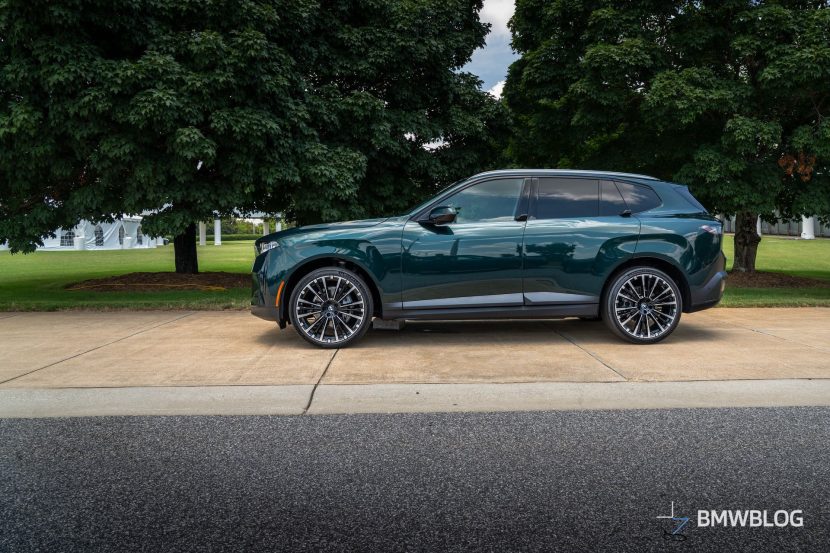
The refreshed X5 is about 2.3 inches longer than its predecessor, the G05 model, measuring between 196.7 and 196.9 inches, with a wheelbase increase of 2.4 inches to 119.5 inches. The distance between the X7's 203.6-inch length and 122.2-inch wheelbase has been reduced from nearly nine inches to just under seven. The variation in wheelbase, impacting rear legroom, has decreased from 5.1 inches to 2.7 inches.
However, BMW has eliminated the optional third-row seating in the X5 (a change implemented years back) along with the distinctive split tailgate. All G65 X5 models are configured as two-row, five-seat SUVs with a standard single-piece liftgate. Customers who previously selected the third row in the X5 are now left with just the X7 as their alternative within BMW’s offerings.
Interior Room and Cargo: The X5 Gained Size Yet Reduced Cargo Space
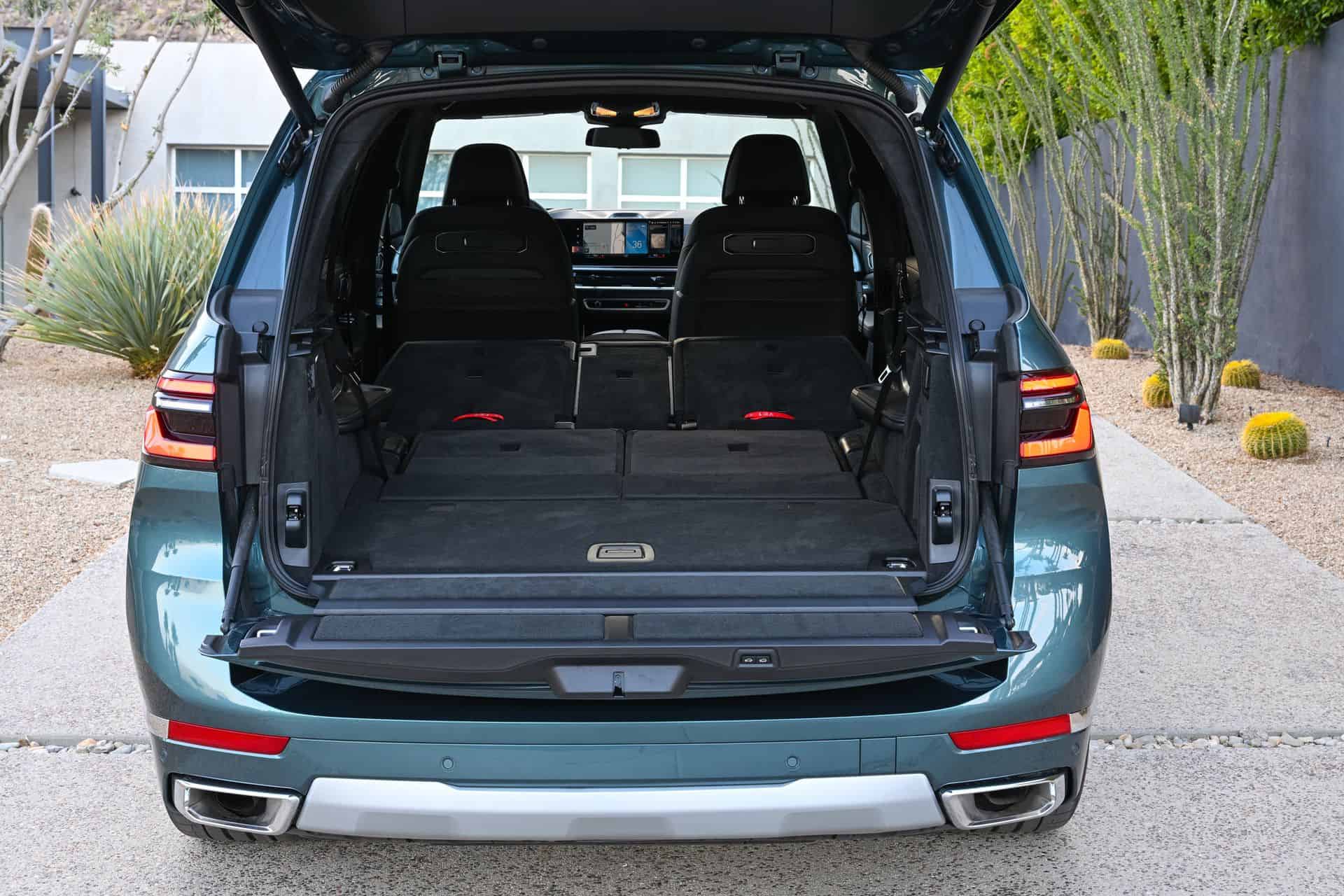
Although the new X5 is larger, it features official cargo space measurements of 27.3 cubic feet behind the rear seats and 67.7 cubic feet when the seats are folded down, compared to the outgoing G05 X5 40i, which provided 33.9 cubic feet and 72.3 cubic feet, respectively. A larger SUV coupled with decreased trunk capacity does not reflect well on BMW, especially for those needing to transport items like strollers or golf clubs. This reduction is likely attributed to the shared PHEV and EV battery setup and a more sharply inclined liftgate.
In contrast, the X7 offers substantially more storage space. With the third row folded down, it provides 48.6 cubic feet, and with both rear rows collapsed, it reaches 90.4 cubic feet, the most among BMW SUVs. Even with the third row occupied, it still leaves 12.8 cubic feet, ample for a few soft bags but limited otherwise. The X7 also features 37.6 inches of legroom in the second row and 39.9 inches of headroom, while the third row offers 33.3 inches of legroom and 36.6 inches of headroom.
Article Overview
- The G65 X5 spans 196.8 inches in length with a 119.5-inch wheelbase, narrowing the gap with the X7 while removing the option for third-row seating.
- There are five powertrain choices available for the X5, including a plug-in hybrid and a full electric variant, in contrast to the current X7, which only offers gasoline engines and lacks a plug-in alternative.
- The starting price for the U.S. X5 is $71,250, roughly $13,000 to $14,000 lower than the X7’s initial price starting at over $86,700.
BMW has introduced the new fifth-generation X5, which notably changes the dynamics with the X7. The G65 X5 is bigger, more luxurious when fully loaded, and incorporates technology not available in the existing X7. Importantly, it has now transitioned to a strictly two-row SUV configuration after nearly two decades. The present X7, on the other hand, is in its concluding year on the G07 platform, with the upcoming G67 model expected to be launched in 2027. Below is a comparison of the two models while both remain available for sale.
The X5 Grows, But Some Features Have Been Omitted
The refreshed X5 is about 2.3 inches longer than its predecessor, the G05 model, measuring between 196.7 and 196.9 inches, with a wheelbase increase of 2.4 inches to 119.5 inches. The distance between the X7’s 203.6-inch length and 122.2-inch wheelbase has been reduced from nearly nine inches to just under seven. The variation in wheelbase, impacting rear legroom, has decreased from 5.1 inches to 2.7 inches.
However, BMW has eliminated the optional third-row seating in the X5 (a change implemented years back) along with the distinctive split tailgate. All G65 X5 models are configured as two-row, five-seat SUVs with a standard single-piece liftgate. Customers who previously selected the third row in the X5 are now left with just the X7 as their alternative within BMW’s offerings.
Interior Room and Cargo: The X5 Gained Size Yet Reduced Cargo Space
Although the new X5 is larger, it features official cargo space measurements of 27.3 cubic feet behind the rear seats and 67.7 cubic feet when the seats are folded down, compared to the outgoing G05 X5 40i, which provided 33.9 cubic feet and 72.3 cubic feet, respectively. A larger SUV coupled with decreased trunk capacity does not reflect well on BMW, especially for those needing to transport items like strollers or golf clubs. This reduction is likely attributed to the shared PHEV and EV battery setup and a more sharply inclined liftgate.
In contrast, the X7 offers substantially more storage space. With the third row folded down, it provides 48.6 cubic feet, and with both rear rows collapsed, it reaches 90.4 cubic feet, the most among BMW SUVs. Even with the third row occupied, it still leaves 12.8 cubic feet, ample for a few soft bags but limited otherwise. The X7 also features 37.6 inches of legroom in the second row and 39.9 inches of headroom, while the third row offers 33.3 inches of legroom and 36.6 inches of headroom.