March 26, 2026
Hyundai's Daring Growth in North America: 36 Fresh Models by 2030
Hyundai Motor is sharpening its emphasis on its most profitable market. CEO Jose Muñoz has recently unveiled a comprehensive strategic initiative for North America, which includes the introduction of 36 new vehicles by 2030. This expansion is supported by a remarkable $26 billion investment aimed at localizing production, navigating tariff obstacles, and spearheading the next generation of automotive innovation. From extended-range EVs to the brand’s inaugural true midsize pickup, Hyundai is poised to reshape the American landscape.A $26 Billion Commitment to U.S. ManufacturingHyundai’s shift from a Korea-based export model to a U.S.-centered manufacturing titan is unparalleled. The planned $26 billion investment between 2025 and 2028 exceeds the company’s total U.S. investment since its market entry in 1986.The investment breakdown encompasses:- $12 Billion: Increasing annual U.S. production capacity to 1.2 million vehicles. - $7 Billion: Fortifying the supply chain, featuring a dedicated new steel mill in Louisiana. - $7 Billion: Advancing “Future Tech” such as autonomous driving, robotics, and AI in collaboration with U.S. companies.At the heart of this expansion is Hyundai Motor Group Metaplant America in Georgia. Already manufacturing the IONIQ 5 and IONIQ 9 SUVs, the facility is set to add hybrid production this year and is developing Waymo-equipped autonomous prototypes.600-Mile Ranges and the First Midsize PickupTo reach the 36-vehicle goal, Hyundai is broadening its powertrain strategy to adapt to shifting consumer preferences. Two significant highlights in the upcoming lineup are:1. Extended-Range Electric Vehicles (EREVs): Beginning in 2027, Hyundai plans to launch EREVs capable of driving distances surpassing 600 miles or 965 km. These vehicles utilize a small internal combustion engine to recharge the battery en route, alleviating range anxiety.2. Body-on-Frame Midsize Pickup: Before 2030, Hyundai will officially venture into the profitable truck market with its first body-on-frame midsize pickup, moving beyond the unibody structure of the Santa Cruz to directly compete with major industry players.Record-Breaking MomentumDespite a 15% tariff on automobiles, Hyundai’s North American sales rose 8% year-over-year to 1.2 million units last year. This represented the fifth consecutive year of record retail sales.Key Performance Indicators | Achievements ---|--- Top Selling Models | Tucson, Elantra, Santa Fe, Palisade, IONIQ 5, Venue EV Market Share | EVs now constitute 26% of Hyundai’s retail mix Genesis Brand | Achieved a record 82,000 units sold in the U.S.Beyond the Car: AI and RoboticsHyundai is transitioning from a car manufacturer to a technology-oriented mobility provider. Through collaborations with Nvidia, Google DeepMind, and Waymo, the company is incorporating physical AI into its fleet.Furthermore, Hyundai intends to transform the factory environment. By 2028, the company aims to increase the production of Boston Dynamics’ Atlas humanoid robots to 30,000 units per year to support manufacturing activities.Global Outlook: China, Europe, and IndiaWhile North America takes precedence, aggressive global expansion continues:- China: 20 new models over five years. - Europe: 5 new models in the upcoming 18 months, including the IONIQ 3. - India: 26 new models by 2030, including the first locally developed electric SUV and the launch of the Genesis brand.With 36 new models on the horizon and a production capacity poised to compete with the largest domestic players, Hyundai is set to lead the transition to a high-tech, electrified future in North America.

Hyundai Motor is sharpening its emphasis on its most profitable market. CEO Jose Muñoz has recently unveiled a comprehensive strategic initiative for North America, which includes the introduction of 36 new vehicles by 2030. This expansion is supported by a remarkable $26 billion investment aimed at localizing production, navigating tariff obstacles, and spearheading the next generation of automotive innovation. From extended-range EVs to the brand’s inaugural true midsize pickup, Hyundai is poised to reshape the American landscape.

A $26 Billion Commitment to U.S. Manufacturing

Hyundai’s shift from a Korea-based export model to a U.S.-centered manufacturing titan is unparalleled. The planned $26 billion investment between 2025 and 2028 exceeds the company’s total U.S. investment since its market entry in 1986.

The investment breakdown encompasses:

– $12 Billion: Increasing annual U.S. production capacity to 1.2 million vehicles.
– $7 Billion: Fortifying the supply chain, featuring a dedicated new steel mill in Louisiana.
– $7 Billion: Advancing “Future Tech” such as autonomous driving, robotics, and AI in collaboration with U.S. companies.

At the heart of this expansion is Hyundai Motor Group Metaplant America in Georgia. Already manufacturing the IONIQ 5 and IONIQ 9 SUVs, the facility is set to add hybrid production this year and is developing Waymo-equipped autonomous prototypes.

600-Mile Ranges and the First Midsize Pickup

To reach the 36-vehicle goal, Hyundai is broadening its powertrain strategy to adapt to shifting consumer preferences. Two significant highlights in the upcoming lineup are:

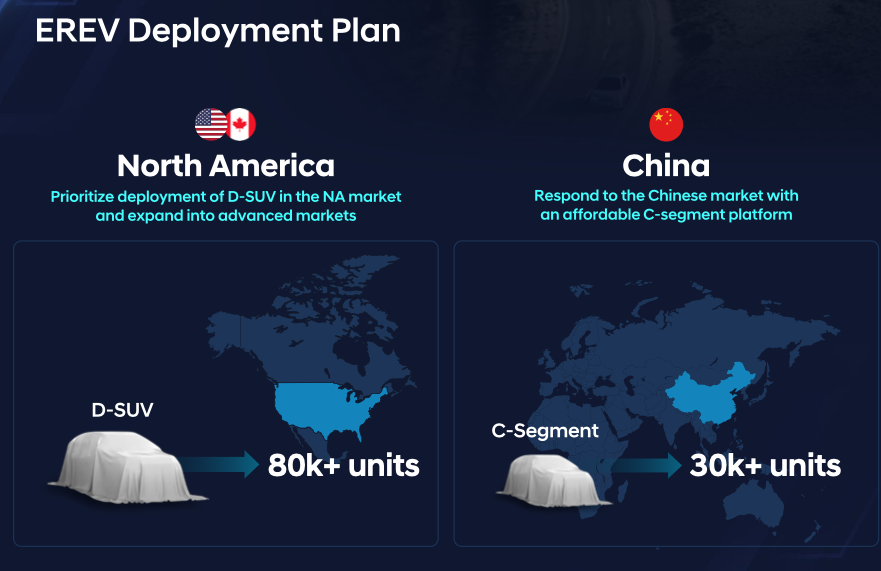
1. Extended-Range Electric Vehicles (EREVs): Beginning in 2027, Hyundai plans to launch EREVs capable of driving distances surpassing 600 miles or 965 km. These vehicles utilize a small internal combustion engine to recharge the battery en route, alleviating range anxiety.

2. Body-on-Frame Midsize Pickup: Before 2030, Hyundai will officially venture into the profitable truck market with its first body-on-frame midsize pickup, moving beyond the unibody structure of the Santa Cruz to directly compete with major industry players.

Record-Breaking Momentum

Despite a 15% tariff on automobiles, Hyundai’s North American sales rose 8% year-over-year to 1.2 million units last year. This represented the fifth consecutive year of record retail sales.

Key Performance Indicators | Achievements
—|—
Top Selling Models | Tucson, Elantra, Santa Fe, Palisade, IONIQ 5, Venue
EV Market Share | EVs now constitute 26% of Hyundai’s retail mix
Genesis Brand | Achieved a record 82,000 units sold in the U.S.

Beyond the Car: AI and Robotics

Hyundai is transitioning from a car manufacturer to a technology-oriented mobility provider. Through collaborations with Nvidia, Google DeepMind, and Waymo, the company is incorporating physical AI into its fleet.

Furthermore, Hyundai intends to transform the factory environment. By 2028, the company aims to increase the production of Boston Dynamics’ Atlas humanoid robots to 30,000 units per year to support manufacturing activities.

Global Outlook: China, Europe, and India

While North America takes precedence, aggressive global expansion continues:

– China: 20 new models over five years.
– Europe: 5 new models in the upcoming 18 months, including the IONIQ 3.
– India: 26 new models by 2030, including the first locally developed electric SUV and the launch of the Genesis brand.

With 36 new models on the horizon and a production capacity poised to compete with the largest domestic players, Hyundai is set to lead the transition to a high-tech, electrified future in North America.