Summary of the Article
- Founded in 1987 in Aachen, AC Schnitzer originated from the racing legacy of Schnitzer Motorsport, emphasizing precise engineering to improve BMWs rather than garnering attention through flashy alterations.
- The 1990s represented a high point for German tuning, defined by adaptable BMW platforms, regulations that encouraged independent innovation, and a conviction among drivers that a factory car served merely as a starting point.
- Nowadays, BMWs are limited by proprietary software and factory performance choices, which has lessened the influence of independent tuners, creating a feeling of completeness in ownership while hindering opportunities for personal engagement.
The closure of AC Schnitzer holds significant importance, not only for what it became but also for what it symbolized during its height and how it connects with my personal relationship with BMW. This story goes beyond a simple business narrative; it encapsulates a deeper, more personal atmosphere that intertwines culture and reminiscence. It conjures a particular image of Germany, characterized by autobahns necessitating speed control, quiet industrial avenues, and workshops thriving on their craftsmanship without the requirement for marketing. For those who interact with these vehicles daily, seeing them as more than mere possessions, the sense of loss is profound, like a familiar entity has suddenly fallen silent.
Owning a BMW brings with it a unique rhythm, a sense of familiarity that evolves over time without losing its charm. As one approaches the vehicle and settles in, there’s a brief, unspoken moment of connection where the machine feels reliably comforting—not due to simplicity, but coherence. Even within today’s cars, shaped by both software and engineering, that feeling endures, albeit in a more filtered way. This may clarify the emotional significance of AC Schnitzer's exit; it acts as a reminder of a time when the feeling of potential stretched beyond factory limits, and the car in front of you was merely the beginning of its story.
The Prime Era
The 1990s are notable as a prime era for domestic German tuners, with origins tracing back to the late 1980s and continuing influence into the early 2000s. This time feels almost incomprehensibly harmonious, as though every essential element came together perfectly. BMW crafted cars that showcased remarkable clarity and dependability, machines that felt both finished and open, sophisticated yet approachable. While electronics began to influence the future, they had not yet alienated cars from those eager to alter them. Regulations existed but had not yet hindered progress. Most crucially, drivers still held the belief that a vehicle, regardless of its refinement, was not complete upon departing the factory.
This conviction cultivated a unique German tuning culture, greatly divergent from today’s environment. Germany produced tuners with distinct identities and philosophies. ALPINA, Hartge, and AC Schnitzer regarded BMW not as a medium for attention-grabbing changes but as a project to be fulfilled. The vehicles originating from their workshops maintained their roots while being refined with greater precision and intent, embodying a quiet assurance that characterized the era.
AC Schnitzer: Engineering Over Show
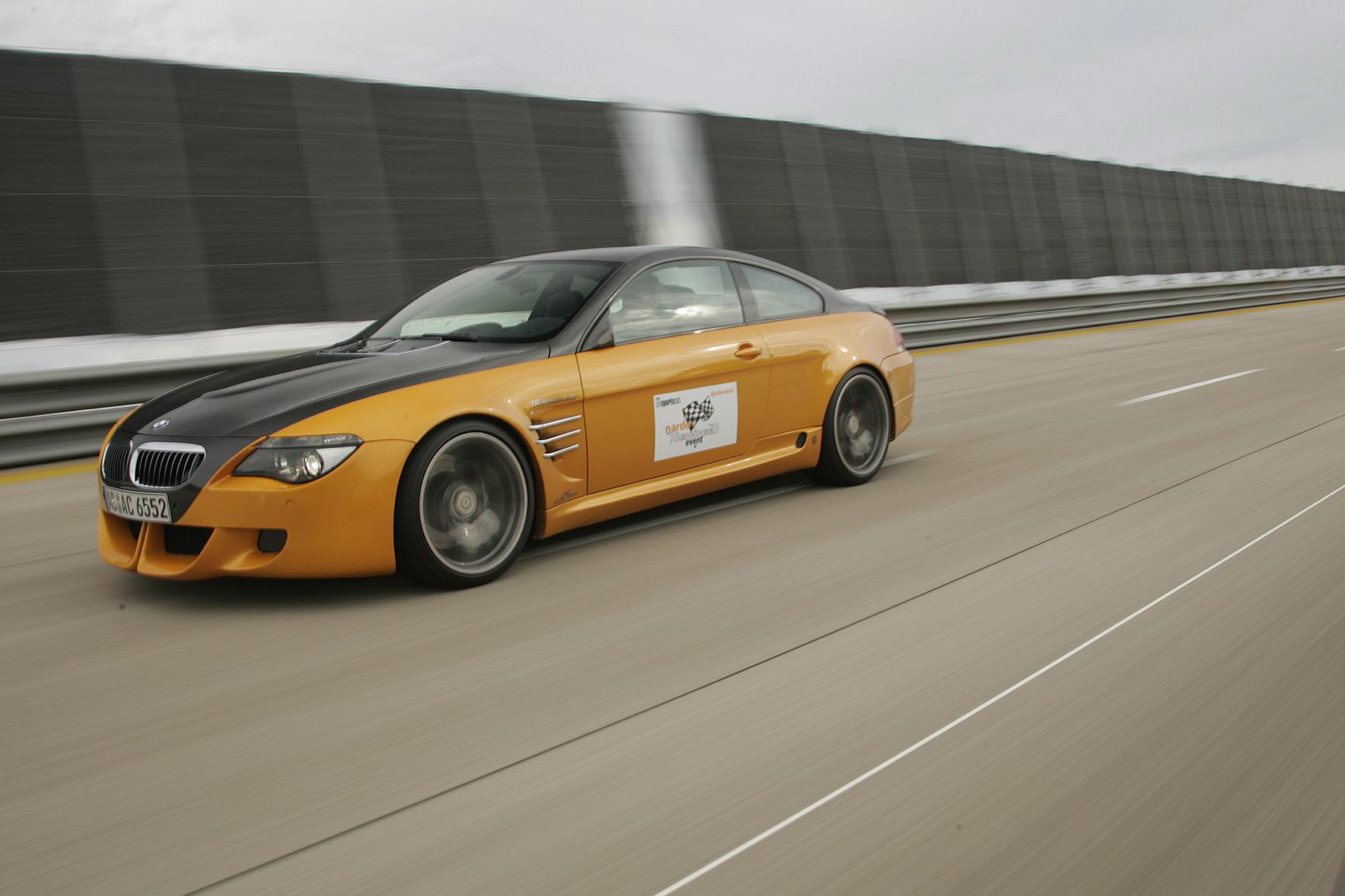
AC Schnitzer was established in 1987 in Aachen, leveraging the racing heritage of Schnitzer Motorsport, and quickly set itself apart with a focus on engineering rather than show. Its early iterations, like the ACS7 based on the E32 7 Series and the ACS3 Sport based on the E30 M3, demonstrated a commitment to enhancing vehicles through careful modifications rather than dramatic changes. Adjustments were subtle yet collectively transformed the cars into more unified entities. Suspension tweaks were executed with precision, power improvements felt seamless, and aerodynamic enhancements seemed integral rather than ornamental.
Even its more daring endeavors followed this philosophy. The V8 Roadster, which integrated a 4.4-liter V8 into the compact Z3, could have been chaotic in less skilled hands but remained controlled and composed, exemplifying the same philosophy adopted.
Summary of the Article
- Founded in 1987 in Aachen, AC Schnitzer originated from the racing legacy of Schnitzer Motorsport, emphasizing precise engineering to improve BMWs rather than garnering attention through flashy alterations.
- The 1990s represented a high point for German tuning, defined by adaptable BMW platforms, regulations that encouraged independent innovation, and a conviction among drivers that a factory car served merely as a starting point.
- Nowadays, BMWs are limited by proprietary software and factory performance choices, which has lessened the influence of independent tuners, creating a feeling of completeness in ownership while hindering opportunities for personal engagement.
The closure of AC Schnitzer holds significant importance, not only for what it became but also for what it symbolized during its height and how it connects with my personal relationship with BMW. This story goes beyond a simple business narrative; it encapsulates a deeper, more personal atmosphere that intertwines culture and reminiscence. It conjures a particular image of Germany, characterized by autobahns necessitating speed control, quiet industrial avenues, and workshops thriving on their craftsmanship without the requirement for marketing. For those who interact with these vehicles daily, seeing them as more than mere possessions, the sense of loss is profound, like a familiar entity has suddenly fallen silent.
Owning a BMW brings with it a unique rhythm, a sense of familiarity that evolves over time without losing its charm. As one approaches the vehicle and settles in, there’s a brief, unspoken moment of connection where the machine feels reliably comforting—not due to simplicity, but coherence. Even within today’s cars, shaped by both software and engineering, that feeling endures, albeit in a more filtered way. This may clarify the emotional significance of AC Schnitzer’s exit; it acts as a reminder of a time when the feeling of potential stretched beyond factory limits, and the car in front of you was merely the beginning of its story.
The Prime Era
The 1990s are notable as a prime era for domestic German tuners, with origins tracing back to the late 1980s and continuing influence into the early 2000s. This time feels almost incomprehensibly harmonious, as though every essential element came together perfectly. BMW crafted cars that showcased remarkable clarity and dependability, machines that felt both finished and open, sophisticated yet approachable. While electronics began to influence the future, they had not yet alienated cars from those eager to alter them. Regulations existed but had not yet hindered progress. Most crucially, drivers still held the belief that a vehicle, regardless of its refinement, was not complete upon departing the factory.
This conviction cultivated a unique German tuning culture, greatly divergent from today’s environment. Germany produced tuners with distinct identities and philosophies. ALPINA, Hartge, and AC Schnitzer regarded BMW not as a medium for attention-grabbing changes but as a project to be fulfilled. The vehicles originating from their workshops maintained their roots while being refined with greater precision and intent, embodying a quiet assurance that characterized the era.
AC Schnitzer: Engineering Over Show
AC Schnitzer was established in 1987 in Aachen, leveraging the racing heritage of Schnitzer Motorsport, and quickly set itself apart with a focus on engineering rather than show. Its early iterations, like the ACS7 based on the E32 7 Series and the ACS3 Sport based on the E30 M3, demonstrated a commitment to enhancing vehicles through careful modifications rather than dramatic changes. Adjustments were subtle yet collectively transformed the cars into more unified entities. Suspension tweaks were executed with precision, power improvements felt seamless, and aerodynamic enhancements seemed integral rather than ornamental.
Even its more daring endeavors followed this philosophy. The V8 Roadster, which integrated a 4.4-liter V8 into the compact Z3, could have been chaotic in less skilled hands but remained controlled and composed, exemplifying the same philosophy adopted.