
Overview of the Article
- A E87 116i is now equipped with a twin-turbo N54B30 engine sourced from a 335i, paired with the N54's six-speed manual gearbox.
- The chassis contains a complete E92 M3 rear subframe, control arms, and brakes, reflecting the parts-bin technique utilized by BMW for the initial 1M.
- With the 1M being solely a coupe, the rear widebody is specially crafted from merged bumpers and elongated sideskirts.
BMW offered the 1M for only a single production year as a two-door model before it was phased out. There was no hatch variant, nor a four-door option, and nothing suitable for family purposes. One owner recognized this shortcoming and opted not to wait for BMW to develop a remedy. Instead, he resolved to fabricate it on his own, beginning with an unexpected donor: a base E87 116i, a five-door, four-cylinder vehicle that usually goes overlooked in parking areas.
Commencing From the Ground Up
The 116i represents BMW’s entry-level offering in the 1 Series line, lacking the enthusiast allure of its more premium variants. It attracts those desiring the emblem without a strong focus on performance. This makes it the perfect foundation for this undertaking: there’s nothing original to protect, enabling a total overhaul. The striking difference between the original E87 116i and its transformed state is essential to the build's vision.
N54 Engine Replacement with the Appropriate Transmission
The initial engine has been substituted with the N54B30, BMW’s twin-turbo three-liter six-cylinder powerplant. In its 335i setup, this engine generates 300 horsepower and 300 lb-ft of torque, with modified versions known to easily surpass these numbers. Although the owner has not revealed particular power figures for this configuration, opting for the N54’s six-speed manual gearbox—over a more practical option—emphasizes the dedication to driving engagement over mere power stats.
Employing BMW’s Own Engineering Principles for the Chassis
The assembly feels more like a genuine tribute than just a random fusion of parts, as the original 1M made use of M3 elements for its rear axle, acquiring components from the E90 M3 due to its limited production. This construction follows a similar methodology, utilizing E92 M3 parts for the rear subframe, control arms, and brakes. This isn't just an expedient; it adheres to the standards set by BMW in the creation of the original vehicle.
The front section was acquired directly from BMW’s parts catalog: 1M fenders, front bumper, and headlights. This part of the transformation is quite straightforward, as the 1M and the 1 Series hatchback possess sufficient structural resemblances to enable the swap. Nevertheless, as the 1M was never available as a hatchback, the rear necessitated a distinct strategy.
Fabricating the Nonexistent Rear
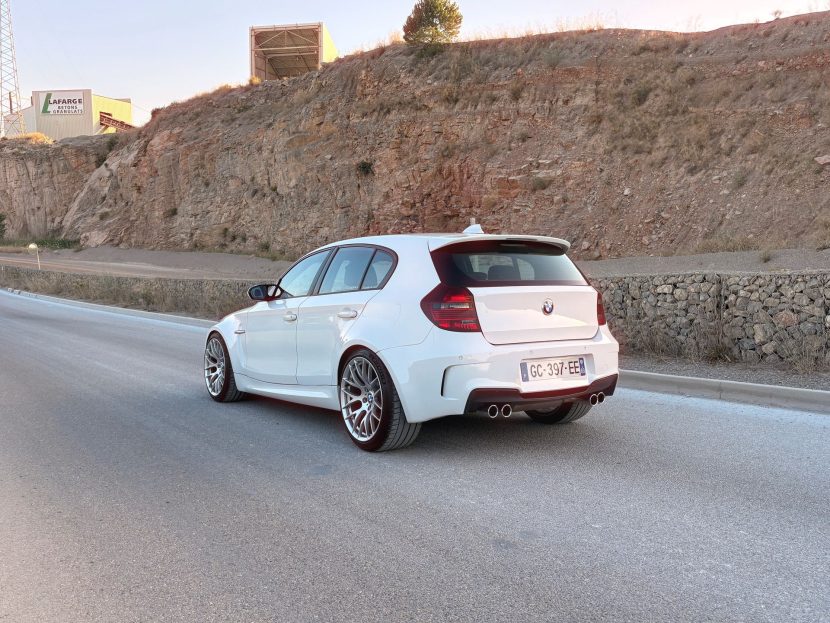
The rear widebody signifies the shift from simply swapping parts to genuine fabrication. With no factory five-door 1M rear bumper or sideskirts in existence, the rear bumper was created by combining two 1M bumpers into a single broader piece, while the back sideskirts were custom-designed by extending four 1M skirts into two that suit the E87’s longer wheelbase. The battery was shifted from the trunk to make room for a shortened OEM 1M exhaust, ensuring a seamless fit.
The vehicle sits on custom forged Style 359M wheels, measuring 19×9.5 ET22 at the front and 19×10.5 ET22 at the rear, equipped with Michelin Pilot Sport 4S tires sized 255/35/19 in the front and 275/35/
Overview of the Article
- A E87 116i is now equipped with a twin-turbo N54B30 engine sourced from a 335i, paired with the N54’s six-speed manual gearbox.
- The chassis contains a complete E92 M3 rear subframe, control arms, and brakes, reflecting the parts-bin technique utilized by BMW for the initial 1M.
- With the 1M being solely a coupe, the rear widebody is specially crafted from merged bumpers and elongated sideskirts.
BMW offered the 1M for only a single production year as a two-door model before it was phased out. There was no hatch variant, nor a four-door option, and nothing suitable for family purposes. One owner recognized this shortcoming and opted not to wait for BMW to develop a remedy. Instead, he resolved to fabricate it on his own, beginning with an unexpected donor: a base E87 116i, a five-door, four-cylinder vehicle that usually goes overlooked in parking areas.
Commencing From the Ground Up
The 116i represents BMW’s entry-level offering in the 1 Series line, lacking the enthusiast allure of its more premium variants. It attracts those desiring the emblem without a strong focus on performance. This makes it the perfect foundation for this undertaking: there’s nothing original to protect, enabling a total overhaul. The striking difference between the original E87 116i and its transformed state is essential to the build’s vision.
N54 Engine Replacement with the Appropriate Transmission
The initial engine has been substituted with the N54B30, BMW’s twin-turbo three-liter six-cylinder powerplant. In its 335i setup, this engine generates 300 horsepower and 300 lb-ft of torque, with modified versions known to easily surpass these numbers. Although the owner has not revealed particular power figures for this configuration, opting for the N54’s six-speed manual gearbox—over a more practical option—emphasizes the dedication to driving engagement over mere power stats.
Employing BMW’s Own Engineering Principles for the Chassis
The assembly feels more like a genuine tribute than just a random fusion of parts, as the original 1M made use of M3 elements for its rear axle, acquiring components from the E90 M3 due to its limited production. This construction follows a similar methodology, utilizing E92 M3 parts for the rear subframe, control arms, and brakes. This isn’t just an expedient; it adheres to the standards set by BMW in the creation of the original vehicle.
The front section was acquired directly from BMW’s parts catalog: 1M fenders, front bumper, and headlights. This part of the transformation is quite straightforward, as the 1M and the 1 Series hatchback possess sufficient structural resemblances to enable the swap. Nevertheless, as the 1M was never available as a hatchback, the rear necessitated a distinct strategy.
Fabricating the Nonexistent Rear
The rear widebody signifies the shift from simply swapping parts to genuine fabrication. With no factory five-door 1M rear bumper or sideskirts in existence, the rear bumper was created by combining two 1M bumpers into a single broader piece, while the back sideskirts were custom-designed by extending four 1M skirts into two that suit the E87’s longer wheelbase. The battery was shifted from the trunk to make room for a shortened OEM 1M exhaust, ensuring a seamless fit.
The vehicle sits on custom forged Style 359M wheels, measuring 19×9.5 ET22 at the front and 19×10.5 ET22 at the rear, equipped with Michelin Pilot Sport 4S tires sized 255/35/19 in the front and 275/35/